

22 May
How Stainless Steel Fork Tine Design Affects Quality and Bulk Orders
How Stainless Steel Fork Tine Design Aff...
How Stainless Steel Fork Tine Design Affects Quality and Bulk Orders
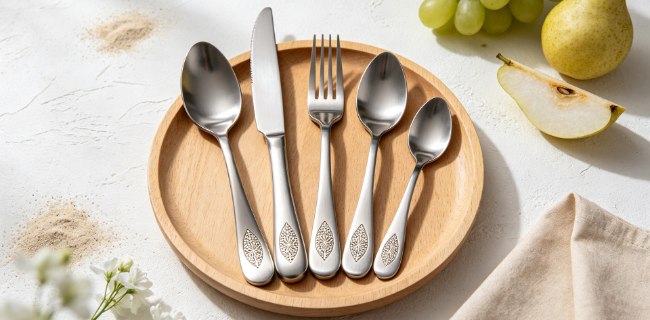
Stainless steel forks are essential components of cutlery sets for hotels, restaurants, retailers, catering companies, and household tableware brands. Although fork tines may appear simple, their shape, thickness, spacing, and finishing can influence eating comfort, durability, appearance, and production consistency.
For B2B buyers, understanding these details helps reduce sample revisions and supports more reliable bulk purchasing. Homefelt factory provides stainless steel cutlery customization, OEM/ODM manufacturing, private label development, and wholesale production for customers with different market requirements.
Why Fork Tine Design Matters
Fork tines must balance functionality, appearance, and structural strength. Their length, width, spacing, and tip shape affect how easily the fork handles different foods.
For standard dining cutlery, buyers should evaluate the following details:
Tine length: Influences the fork's proportions and suitability for different serving or dining applications.
Tine spacing: Affects how easily the fork picks up and holds food.
Tine thickness: Influences rigidity, weight, and the overall feel during use.
Tip shape: Rounded or carefully finished tips can improve handling comfort.
Surface finishing: Smooth, consistent surfaces help create a professional appearance and simplify routine cleaning.
The ideal design depends on the intended market. A retail flatware set may prioritize appearance and coordinated design, while commercial cutlery orders may place greater emphasis on repeated use, durability, and consistent replacement availability.
Stainless Steel Material and Product Specifications
Material selection is an important starting point when sourcing stainless steel forks. Common options include 18/10, 18/8, and 18/0 stainless steel, although the actual composition should always be confirmed against the supplier's material specification.
Buyers should not rely on grade labels alone. Corrosion resistance, hardness, manufacturing quality, finishing, and the intended cleaning environment all contribute to the final product's performance.
Before approving a stainless steel fork, request a specification sheet covering:
Material grade and documented composition
Overall length and head dimensions
Handle width and thickness
Product weight and dimensional tolerances
Surface finish, such as mirror polish or brushed finish
Applicable food-contact requirements and supporting test documentation
These details help importers compare samples fairly and establish measurable expectations for production. The final specifications should reflect the customer's price target, product positioning, and local compliance requirements.
How to Evaluate Fork Quality Before Ordering
A polished appearance is not enough to establish product quality. Professional buyers should evaluate samples through a combination of dimensional checks, visual inspection, and performance testing appropriate to the product.
First, check whether the fork sits comfortably in the hand and whether its proportions match the intended cutlery set. Next, inspect the tine alignment, edge smoothness, polishing consistency, and handle symmetry.
For larger orders, buyers can also define acceptance criteria for dimensions, weight variation, visible surface defects, and packaging condition. Where relevant, the supplier and buyer should agree on inspection procedures before mass production begins.
Testing should be selected according to the product's intended use. Corrosion-related tests, for example, should follow an agreed method and appropriate acceptance criteria rather than relying on a general statement that a product is corrosion-resistant.
OEM and ODM Fork Manufacturing for Different Markets
Retail brands, hospitality distributors, and promotional product companies often need different fork designs. OEM manufacturing allows buyers to provide established specifications, drawings, or reference samples. ODM services can support the development of a new design based on the customer's requirements.
Homefelt factory can work with customers on product design, handle styling, surface finishes, coordinated knife-fork-spoon sets, logo presentation, and retail packaging. This approach helps buyers develop products suited to their brand identity without treating every project as a standard catalogue order.
For private label projects, it is important to confirm logo placement, artwork files, packaging dimensions, barcode requirements, and carton markings before approving the final sample. Any special finish or customized component should also be evaluated for production feasibility and repeatability.
Bulk Production Planning and Quality Consistency
A successful sample must be reproducible at scale. Before placing a wholesale order, buyers should confirm the approved sample, material specification, order quantity, production schedule, packaging details, and inspection requirements.
For bulk cutlery projects, a practical workflow includes:
Confirming product drawings, dimensions, materials, and finishes.
Reviewing and approving pre-production samples.
Establishing inspection criteria for appearance and dimensions.
Checking product consistency during manufacturing.
Verifying quantities, protective packaging, and carton information before shipment.
Actual minimum order quantities and lead times depend on design complexity, customization requirements, material availability, and production scheduling. Buyers should request a project-specific quotation rather than assume that all fork designs share the same production conditions.
Certifications, Testing, and Supplier Evaluation
When choosing a stainless steel cutlery manufacturer, buyers should review relevant factory audit records, management-system certificates, and product testing documents. Each document serves a different purpose.
Factory audits may provide information about working conditions and operational practices. Quality management certificates address management systems within their stated scope. Product test reports should identify the tested product or sample, test method, results, and issuing laboratory where applicable.
Homefelt has experience serving customers with different brand and sourcing requirements. Buyers can discuss applicable factory credentials, available testing documentation, and project-specific compliance needs during supplier evaluation. Certificates and reports should be checked for validity, scope, and relevance to the actual product being purchased.
A Practical Project Example: Developing a Coordinated Fork for Retail
Consider a retailer planning a stainless steel cutlery set for a new private label collection. The initial sample may have an attractive handle design, but the fork head could look too narrow beside the spoon and knife.
Instead of evaluating each item separately, the buyer and manufacturer can review the complete set together. They can compare handle proportions, overall lengths, surface finishes, and product weights, then adjust the specifications before final sample approval.
The team can subsequently confirm packaging artwork, product quantities, inspection criteria, and shipping arrangements. This project-based approach helps prevent avoidable revisions and makes it easier to maintain consistency across a coordinated product range.
The example illustrates a practical development process; actual results depend on the approved design, production conditions, and agreed quality standards.
Work with Homefelt Factory on Your Next Cutlery Project
Selecting a stainless steel fork involves more than comparing unit prices. Material documentation, tine geometry, finishing quality, production repeatability, and packaging all contribute to the value of a bulk order.
Homefelt factory supports stainless steel knife, fork, and spoon customization, OEM/ODM projects, private label development, wholesale supply, and large-volume production. Customers can discuss product specifications, logo customization, packaging, and transportation as part of a one-stop service.
If you are sourcing a new flatware collection or improving an existing product line, prepare your target dimensions, material requirements, estimated quantity, and reference images. Contact Homefelt to discuss a suitable design, request a quotation, and confirm the specifications for your project.
You May Be Interested In
Stainless Steel Cutlery Sets for Wholesale and Retail Programs
Custom Knife, Fork, and Spoon Manufacturing
Private Label Flatware Design and Packaging
OEM/ODM Stainless Steel Cutlery Factory Services
Bulk Cutlery Production and Quality Inspection
Visit https://www.huabao-homecollection.com/ to explore Homefelt's stainless steel cutlery products and discuss your next wholesale or customization project.