

23 May
How Spoon Handle Balance and Weight Influence Stainless Steel Cutlery Selection
How Spoon Handle Balance and Weight Infl...
How Spoon Handle Balance and Weight Influence Stainless Steel Cutlery Selection
When purchasing stainless steel spoons for retail collections, hotels, restaurants, or distribution programs, buyers often focus on appearance and unit price. However, handle balance and product weight also influence how a spoon feels in the hand, how it matches other cutlery pieces, and whether it meets the expectations of the target market.
For importers and private label brands, these characteristics should be considered during product development rather than after mass production begins. Homefelt factory supports stainless steel knife, fork, and spoon manufacturing, offering OEM/ODM customization, wholesale supply, and bulk production for different commercial requirements.
Why Spoon Balance Matters in Daily Use
A spoon should feel comfortable when held and used. Its balance depends on several connected factors, including handle length, handle thickness, bowl size, material distribution, and the overall dimensions of the product.
A spoon with a large bowl and a lightweight handle may feel different from one with a smaller bowl and a heavier handle, even if both have similar overall lengths. Neither design is automatically better; the right choice depends on the intended application and customer preferences.
For standard dining spoons, buyers should examine three important areas:
Handle proportion: The handle should complement the bowl and create a visually coordinated design.
Weight distribution: The spoon should feel reasonably balanced during normal use.
Grip comfort: Handle width, thickness, edges, and surface texture influence how the spoon feels in the hand.
For hospitality projects, these factors should be evaluated alongside durability, cleaning requirements, and consistency across replacement orders.
Product Weight and Dimensions: What Buyers Should Specify
Product weight is a useful purchasing parameter, but it should not be evaluated independently of dimensions. Two spoons with the same weight may have different bowl shapes, handle profiles, or thickness distributions.
When requesting a quotation from a stainless steel cutlery manufacturer, buyers should establish a clear specification sheet.
Important parameters include:
Overall length in millimeters
Bowl length, width, and depth
Handle width and thickness
Nominal product weight and acceptable tolerance
Stainless steel grade and material documentation
Surface finish and polishing requirements
Logo position and customization method
These specifications help the supplier understand the intended product and reduce differences between samples and production batches. If the spoon belongs to a coordinated cutlery set, buyers should also confirm the relative proportions of the matching knife and fork.
The final dimensions and weight should be established through sample evaluation and documented approval. They should not be selected solely because a competitor's product uses a particular measurement.
Choosing Stainless Steel for Spoon Manufacturing
Stainless steel grade affects corrosion resistance, mechanical properties, appearance, and purchasing cost. Grades such as 18/10, 18/8, and 18/0 are commonly encountered in stainless steel flatware, but buyers should verify the actual material composition rather than relying only on commercial descriptions.
Material selection should reflect the intended product positioning, expected use, and applicable market requirements. For example, a premium retail collection may prioritize a particular material specification and polished appearance, while a high-volume commercial project may require a balance between cost, service life, and ease of replenishment.
Buyers should ask manufacturers for relevant material specifications and supporting documentation. Where product safety or regulatory compliance is required, the applicable testing and documentation should be confirmed for the destination market.
How Handle Design Affects Customization
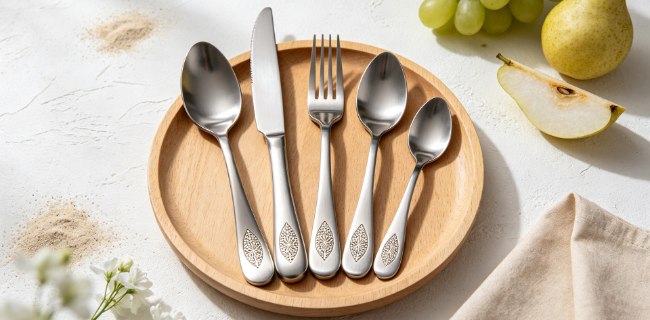
The spoon handle is one of the most visible elements of a cutlery design. A straight handle can create a clean, contemporary appearance, while a curved or decorated profile may suit a more traditional collection.
For OEM projects, buyers can provide existing drawings, approved samples, or detailed reference images. For ODM projects, the manufacturer can work with the buyer to develop a design that fits the intended market and production requirements.
Common customization considerations include:
Handle shape and decorative details
Mirror-polished, satin, or brushed surfaces
Engraved or other suitable logo applications
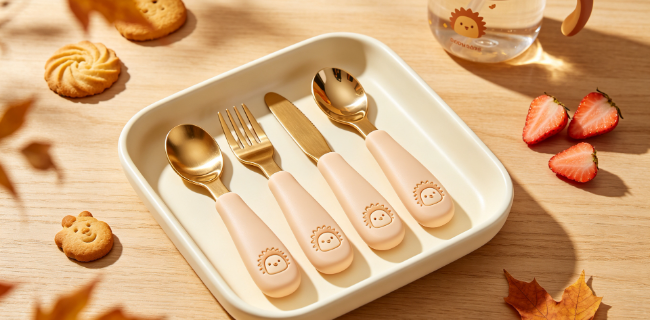
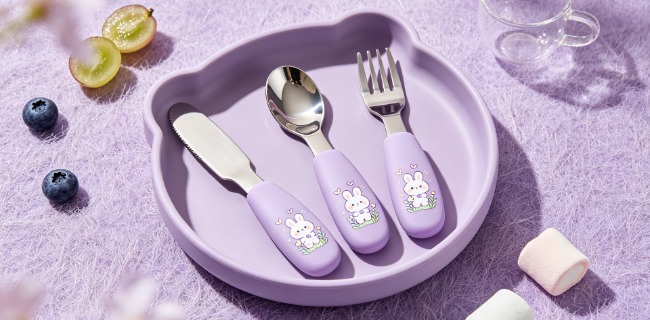
Coordinated designs across spoons, forks, and knives
Gift boxes, retail packaging, and bulk packaging
Every customized detail should be checked for manufacturability, cost, and consistency before the final sample is approved. Special shapes or surface treatments may require additional development time.
Sample Evaluation and Quality Control Before Bulk Orders
A sample provides an opportunity to assess both appearance and practical handling before committing to a large order. Buyers should compare the physical product with the specification sheet and review the spoon under normal lighting conditions.
A practical inspection can include:
Measuring overall length, bowl dimensions, and handle thickness.
Weighing samples to check consistency against the agreed specification.
Inspecting polishing uniformity, scratches, and visible surface defects.
Checking bowl symmetry, handle alignment, and edge smoothness.
Evaluating the spoon's balance and comfort during normal use.
Reviewing logo clarity and packaging presentation where applicable.
For bulk production, the buyer and supplier should agree on inspection methods, sample quantities, tolerances, and acceptance criteria. Any testing requirements should be defined before production rather than introduced after the order has been completed.
This process helps establish measurable quality expectations and provides a practical reference for future repeat orders.
Factory Credentials and Supporting Documents
Supplier evaluation should include more than product photographs and quotations. Depending on the purchasing program, buyers may need to review factory audit records, quality management documentation, and relevant product test reports.
These documents have different purposes. A factory audit provides information about operational practices, while a management-system certificate applies to a defined organizational scope. A product test report should identify the sample tested, the methods used, and the results obtained.
Homefelt has experience working with customers who require structured supplier evaluation and product documentation. Buyers can request information about applicable factory credentials, available testing records, and the documents relevant to their specific cutlery project. All records should be checked for validity and scope before being used to support purchasing or compliance decisions.
Coordinating Spoon Specifications Across a Complete Cutlery Set
For retailers and hospitality distributors, an individual spoon rarely exists in isolation. It may need to match a dinner fork, table knife, dessert spoon, or teaspoon in the same collection.
A coordinated set should maintain visual consistency across handle styling, surface finish, proportions, and branding. Buyers should also consider how individual pieces will be packed and whether replacement items can be reordered with matching specifications.
For example, a distributor developing a new restaurant collection may first approve the spoon's bowl dimensions and handle profile. The manufacturer can then align the remaining cutlery pieces with the approved design, confirm packaging requirements, and establish inspection criteria for the complete set.
This approach supports a more consistent presentation and helps buyers manage product development as a unified project.
Develop Your Custom Spoon Project with Homefelt
Selecting the right stainless steel spoon requires a balance between design, dimensions, weight, material, and manufacturing consistency. Clear specifications make it easier to compare quotations, evaluate samples, and plan repeatable bulk production.
Homefelt factory provides stainless steel cutlery customization, OEM/ODM manufacturing, private label services, wholesale supply, and large-volume production. Support can cover product design, packaging, and transportation according to the customer's project requirements.
To discuss your next order, prepare your preferred spoon style, material requirements, target dimensions, estimated quantity, packaging needs, and destination market. Contact Homefelt to request a tailored quotation and confirm the specifications before sample approval.
You May Be Interested In
Custom Stainless Steel Spoon Manufacturing
Wholesale Stainless Steel Cutlery Sets
OEM/ODM Flatware Development for Retail Brands
Private Label Cutlery Packaging Solutions
Bulk Stainless Steel Knife, Fork, and Spoon Supply
Visit https://www.huabao-homecollection.com/ to explore Homefelt's cutlery range and discuss your wholesale, OEM/ODM, or private label requirements.