

21 May
Stainless Steel Fork Tine Design: A Product Guide for B2B Buyers
Stainless Steel Fork Tine Design: A Prod...
Stainless Steel Fork Tine Design: A Product Guide for B2B Buyers
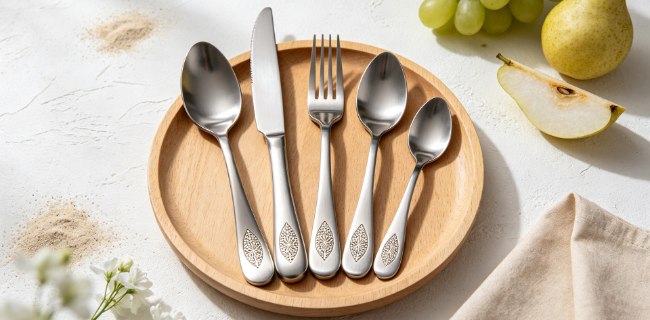
The tines are one of the defining features of a stainless steel dinner fork. Their length, spacing, shape and alignment influence the product's appearance and everyday usability. For importers, distributors, tableware brands and wholesale buyers, understanding these details helps when developing a new cutlery collection or sourcing forks for an existing range.
Homefelt factory specializes in stainless steel cutlery manufacturing and supports OEM/ODM customization, private-label projects and wholesale orders. By confirming fork specifications before sampling and mass production, buyers can establish a product design that matches their target market and purchasing requirements.
1. Why Fork Tine Design Matters
Although many dinner forks appear similar at first glance, small differences in tine geometry can create noticeably different products. A fork with slender, elongated tines may have a refined appearance, while a design with broader tines can look more substantial.
The right configuration depends on the intended product style and use. Buyers should consider tine design alongside the handle profile, overall length and proportions of the complete fork.
Important design details include:
Tine length and width
Spacing between individual tines
Alignment and symmetry
Shape of the tine tips
Thickness and overall profile
Relationship between the fork head and handle
These features should be assessed together. A visually attractive fork still needs consistent dimensions and a well-finished structure to meet the customer's product requirements.
2. Tine Length, Width and Spacing
Tine dimensions help establish the fork's visual character and functional profile. Longer tines create a different appearance from shorter ones, while width and spacing affect the overall shape of the fork head.
When developing a custom design, buyers should avoid specifying only the overall fork length. The fork head needs its own dimensional references so the factory can reproduce the intended configuration.
A useful specification sheet can include:
| Parameter | What to Confirm |
|---|---|
| Overall fork length | Total length from the handle end to the tine tips |
| Fork head length | Dimensions of the working end |
| Tine length | Distance from the tine base to the tip |
| Tine width | Width of each tine according to the drawing |
| Tine spacing | Gaps between adjacent tines |
| Tine alignment | Required symmetry and positioning |
| Material grade | Specified stainless steel composition |
For a new product, buyers can provide a technical drawing, an existing sample or reference images with clearly marked dimensions. This gives the manufacturer a more reliable basis for discussing feasibility and producing a sample.
3. Tine Alignment and Consistency
Consistent tine alignment is an important part of fork appearance. Uneven spacing or visibly misaligned tines can make a product look inconsistent, especially when several forks are displayed together in a retail set.
Buyers should establish the expected appearance before approving production. Depending on the design, checks may cover the relative positioning of the tines, the symmetry of the fork head and the consistency of the finished shape.
For bulk orders, it is useful to include these characteristics in the inspection reference rather than leaving them to subjective judgment. The agreed sample can serve as a visual comparison, while the specification sheet records any measurable requirements.
If the fork is part of a coordinated cutlery collection, its overall width and tine profile should also be reviewed alongside the matching spoon and knife.
4. Tine Tips and Surface Finishing
The finishing of the tine tips and surrounding edges contributes to the overall quality of the finished fork. Buyers should specify the expected finish and check that the fork head is consistent with the approved sample.
Inspection may include looking for visible burrs, irregular edges, unwanted surface marks or inconsistencies in polishing. The inspection method and acceptance criteria should be agreed upon for the particular product rather than relying on a general description such as “high quality.”
Surface treatment can also influence the appearance of the fork. A mirror-polished product has a bright, reflective look, while a satin or brushed finish creates a more subdued effect. Whichever finish is selected, buyers should confirm how it should appear on both the fork head and handle.
For repeat orders, retaining the approved sample and documenting the finish requirements helps provide a consistent reference for future production.
5. Matching the Fork Head to the Handle
The fork head and handle should work as one coherent design. A broad fork head paired with a very narrow handle creates a different visual balance from a slim head combined with a wider handle.
The handle also affects how the fork feels when held. Width, thickness, taper and contour all contribute to the overall impression. These elements should be evaluated alongside the tine dimensions rather than designed independently.
For OEM projects, the buyer may already have a complete technical drawing. For ODM projects, the buyer may need support in refining the proportions and developing a suitable product configuration.
Before finalizing a new design, buyers should review the full-length sample and confirm that the fork head, handle profile, material and finish meet the intended product direction.
6. Stainless Steel Specifications for Fork Production
The stainless steel grade should be stated clearly in the purchase specification. Buyers should confirm the proposed grade and relevant material documentation with the manufacturer, especially when comparing quotations from different suppliers.
Material grade is only one part of the product specification. Buyers should also define the required dimensions, thickness where applicable, finish and any specific performance criteria. A clear specification makes it easier to compare products on an equivalent basis.
For a coordinated collection, the fork should be checked against the matching cutlery items to confirm consistency in material requirements and appearance. Any differences between models should be documented rather than assumed to be identical.
Where applicable, buyers may request material information, inspection records and relevant test reports to support their product evaluation.
7. OEM/ODM and Private-Label Fork Development
Homefelt factory supports customized stainless steel forks, coordinated cutlery collections, OEM/ODM production and wholesale supply for B2B customers.
For a new fork project, buyers can prepare the following information:
Technical drawing or reference sample
Required overall length and fork head dimensions
Tine design and alignment requirements
Stainless steel grade and surface finish
Estimated order quantity and product assortment
Branding, packaging and labeling instructions
Target market and requested delivery schedule
If the final design has not yet been established, buyers can start with a reference image and a description of the intended style. The factory can then discuss possible configurations and identify the details that need to be confirmed before sampling.
Homefelt can also coordinate product design, packaging and transportation requirements as part of a one-stop service process. This can be useful for buyers developing a complete cutlery range rather than sourcing a single fork model.
8. Quality References and Repeat Production
Before mass production, buyers should approve a sample and confirm the final specification. For fork projects, this reference can cover overall dimensions, tine spacing, alignment, surface finish, handle design and material requirements.
Homefelt has experience with company audit and certification programs including BSCI, SEDEX 4P and ISO 9001. Buyers can ask which relevant documents, inspection records or test reports are available for their project. Company-level audits should not be confused with product-specific testing or approval.
For repeat orders, any changes to the tine dimensions, handle design or surface treatment should be recorded and reviewed before production. This reduces ambiguity and helps both parties maintain a consistent product reference.
Discuss Your Stainless Steel Fork Project with Homefelt
A well-developed fork design combines suitable tine geometry, balanced proportions and clearly documented manufacturing requirements. For wholesale buyers, these details provide a practical foundation for sampling, quotation and bulk-order planning.
Homefelt welcomes inquiries from importers, distributors, retailers and tableware brands seeking customized stainless steel forks and coordinated cutlery manufacturing. Share your drawings, reference images, target specifications and estimated quantities to discuss OEM/ODM options and a quotation.
You May Be Interested In
Stainless Steel Spoon Construction: Handle Joints and One-Piece Design Options
Stainless Steel Spoon Edge Finishing: Quality Checks for B2B Buyers
Stainless Steel Spoon Dimensions: A Practical Specification Guide for B2B Buyers