

27 May
Stainless Steel Flatware Decoration Line Position for OEM and Private Label Production
Stainless Steel Flatware Decoration Line...
Stainless Steel Flatware Decoration Line Position for OEM and Private Label Production
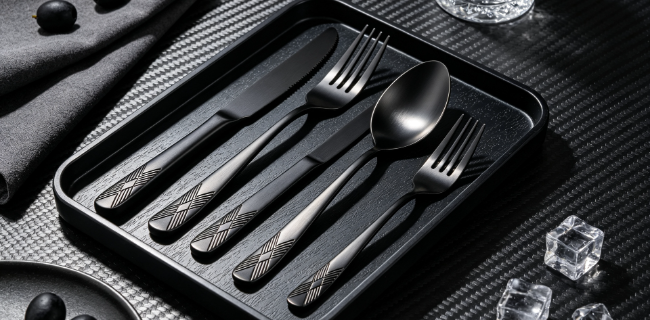
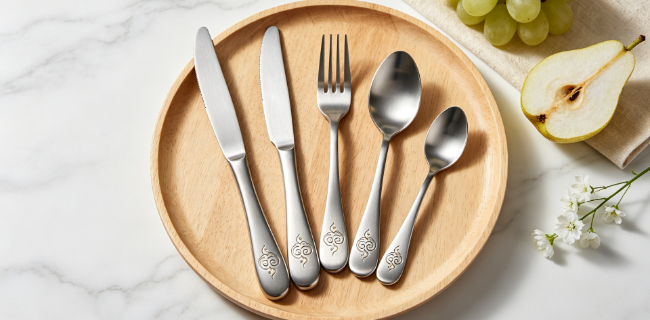
Decorative lines are often used to give stainless steel cutlery a stronger visual identity. A simple line along a handle can make a spoon, fork or knife look more refined, modern or traditional. However, the quality of the finished design depends not only on the shape of the line but also on where it is positioned.
For OEM and private label flatware, decoration line position should be treated as a measurable product detail. Its relationship with the handle centerline, edges, neck and other design elements can influence the overall appearance of the collection.
Homefelt factory works with stainless steel knife, fork and spoon projects where decorative details need to be translated into practical production specifications for consistent bulk manufacturing.
Why Decoration Line Position Matters
A decorative line may appear to be a small detail, but its location can change the visual balance of an entire handle.
A line positioned too close to one edge can make the handle appear visually uneven. A line placed too close to the center may not create the intended design effect. When the same design is applied to a knife, fork and spoon, even small differences in position can make the collection look disconnected.
For B2B buyers, accurate positioning can affect:
Visual balance
Handle symmetry
Collection coordination
Decorative consistency
Brand identity
Sample-to-production accuracy
Batch appearance
This becomes especially important when the cutlery is being developed as a private label collection rather than purchased as a standard product.
Key Parameters for Decoration Line Placement
Decoration line position can be defined using several reference dimensions.
The distance from the line to the handle edge is one useful measurement. Another is the distance from the handle centerline. The line's starting and ending points may also need to be specified.
Depending on the design, buyers may define:
Line position
Line width
Line length
Distance from handle edge
Distance from centerline
Distance from neck
Distance from handle end
Pattern spacing
Line depth or relief
Surface finish
These measurements create a clearer reference for production than a general instruction such as “place the line near the center.”
For custom OEM products, a technical drawing can identify which dimensions are critical and which areas allow flexibility.
Positioning Lines on Different Cutlery Pieces
A decorative line cannot always be copied at exactly the same distance across a complete flatware collection.
A spoon, fork and table knife may have different handle widths and profiles. Their neck areas may also transition differently into the functional head.
For example, a line positioned at the same absolute distance from the edge may appear centered on one handle but noticeably offset on another.
A better approach is to establish a common visual principle.
The design may use:
A consistent relationship with the centerline
A fixed proportional position
A common distance from the handle end
Similar visual spacing around decorative elements
A coordinated starting and ending position
This allows different products to share the same design language while respecting their individual dimensions.
Decoration Lines and Handle Geometry
Handle geometry provides the foundation for decorative positioning.
If a handle tapers from the neck toward the end, the available surface width changes along its length. A straight decorative line may therefore produce different visual spacing from one end to the other.
On a curved handle, the line may need to follow the surface rather than remain completely straight.
This is why decoration should be reviewed together with the handle profile.
For an OEM project, Homefelt can evaluate the decorative concept alongside product dimensions, material thickness and forming requirements before mass production.
From Artwork to Manufacturing Specification
Customers may provide decorative artwork, a CAD drawing, a photograph or an existing sample.
The factory's task is to convert that reference into information that can be reproduced.
A useful production specification can identify the location of the decoration relative to established reference points.
For example, instead of describing a line as “slightly above the middle,” the drawing can define its position relative to the handle centerline or a fixed end point.
This makes the requirement easier for production and quality teams to understand.
It also helps when the product is reordered later.
Why Position Consistency Matters in Bulk Orders
A variation of a few millimeters may not seem significant when looking at one spoon. When hundreds of pieces are placed next to each other, however, inconsistent decoration can become immediately visible.
For retail customers, this can affect shelf presentation.
For hospitality buyers, inconsistent pieces can make a complete table setting look less coordinated.
For private label brands, decorative inconsistency can weaken the visual identity of the collection.
Therefore, critical decorative positions can be included in the inspection reference for bulk production.
Inspection may consider:
Decoration position
Line length
Line width
Pattern alignment
Handle symmetry
Surface condition
Overall appearance
The actual tolerance should be determined according to the design and manufacturing method.
A Practical Private Label Example
Consider a brand developing a new stainless steel flatware collection with a narrow decorative line running along the handle.
The customer wants the line to create a subtle premium appearance without making the handle look crowded.
During sample development, the line can be tested at different positions to determine the most balanced visual effect.
Once the preferred position is approved, the location can be documented in the product specification.
The production team can then use the approved sample and defined dimensions as references during bulk manufacturing.
This process gives the buyer greater control over the finished appearance without making the design unnecessarily complicated.
Embossed, Recessed and Surface-Applied Lines
Decoration lines can be created through different manufacturing approaches.
Some designs use embossed or raised details. Others use recessed lines formed into the stainless steel surface. Certain collections may use surface treatments or decorative processes to create visual lines.
The appropriate method depends on the desired appearance, material specification and production quantity.
A recessed line, for example, may create a stronger shadow effect than a very shallow surface detail. A raised line may catch more light on a polished handle.
The location of the feature remains important in both cases.
When selecting a decorative method, the factory should consider not only how the sample looks but also whether the feature can be reproduced consistently at the required volume.
Material Thickness and Decorative Position
Material thickness can influence the available design options.
A decorative feature formed into stainless steel needs to be compatible with the material and surrounding geometry. The same line design may behave differently when applied to products with different thickness specifications.
For this reason, buyers should confirm the material specification together with the decoration requirements.
Relevant product parameters may include:
Stainless steel grade
Material thickness
Handle width
Handle profile
Decorative line dimensions
Forming method
Surface finish
Overall product dimensions
These details allow the design and manufacturing teams to evaluate the complete product rather than treating the decoration as an isolated feature.
Surface Finish and Decorative Contrast
The visual effect of a decoration line also depends on the surface finish.
On polished stainless steel, reflections can make a raised or recessed line highly visible.
On satin or brushed surfaces, the contrast may be softer.
Colored stainless steel cutlery introduces another consideration because the surface treatment can change the relationship between the decorative feature and the surrounding area.
For OEM and private label projects, the decoration should therefore be evaluated using the intended final finish.
A digital rendering is useful for discussing the concept, but a finished physical sample provides a much more reliable reference for approval.
Homefelt Experience in Custom Flatware
Homefelt factory has 40 years of experience in the stainless steel cutlery business and supports customers with OEM, ODM, private label, wholesale and large-volume production.
The factory can work from customer drawings, reference samples and design concepts for stainless steel spoons, forks, knives and complete flatware collections.
For customized decorative details, the development process can connect product design with manufacturing requirements, helping customers establish a clear specification before moving into bulk production.
This is particularly useful for brands that plan to reorder the same design or expand a successful collection with additional pieces.
Quality and Supporting Documentation
Professional B2B buyers may request inspection information, product specifications and relevant certification or testing documentation during supplier evaluation.
Homefelt has passed BSCI, SEDEX 4P, BRC and ISO9001 requirements and has experience with Disney audits. FAMA and FSC certifications are also part of the company's documented capabilities.
The exact documents required can be matched to the customer's project and market.
For custom flatware, documentation works together with the approved sample and product specification to create a practical production reference.
OEM, ODM and Private Label Manufacturing
Homefelt supports customers requiring:
Custom stainless steel cutlery
OEM knife, fork and spoon production
ODM flatware development
Private label manufacturing
Wholesale stainless steel flatware
Commercial cutlery supply
Bulk production
Custom packaging and branding
The factory can provide a one-stop service covering product design, manufacturing, packaging and transportation.
Customers can develop an exclusive service package according to their product requirements, order volume and market positioning.
This integrated approach can make it easier to manage a complete flatware project from the first sample through repeat production.
What to Send When Requesting a Quotation
For a decorative flatware project, buyers can provide:
Product drawing or reference sample
Decoration artwork
Desired line position
Material specification
Thickness
Surface finish
Product quantity
Packaging requirements
Target market
Delivery requirements
If the exact decorative position has not yet been finalized, the buyer can simply provide the desired visual effect.
Homefelt can then review the concept and discuss practical manufacturing options.
A Clear Specification Supports Repeat Orders
For long-term private label and wholesale programs, the value of a defined decoration position extends beyond the first order.
When the same SKU is reordered, a clear reference helps the factory reproduce the original design without relying entirely on memory or photographs.
It also provides a useful basis when the buyer adds a matching knife, fork or spoon to an existing collection.
By documenting important visual details, the buyer can maintain a more consistent product identity as the collection grows.
Build Your Custom Flatware Collection with Homefelt
Decorative details should support the product rather than create unnecessary manufacturing complexity. A well-positioned line can improve the visual balance of stainless steel cutlery while giving a private label collection a recognizable design feature.
For OEM and ODM buyers, the most effective approach is to evaluate decoration position together with handle geometry, material, forming and surface finish.
Homefelt factory can support this process from product design and sample development through manufacturing, packaging and transportation.
If you are developing custom stainless steel spoons, forks, knives or a complete flatware collection, send your drawings, artwork or reference samples to ingrid@homefelt.net for product discussion and quotation.
You May Be Interested In
Homefelt provides OEM, ODM, private label and wholesale stainless steel cutlery manufacturing for brands, distributors and commercial buyers.
Share your product concept, decoration artwork and target quantity to discuss a practical one-stop solution for your next stainless steel flatware project.