

25 May
How to Plan Stainless Steel Cutlery Set Configurations for Wholesale Orders
How to Plan Stainless Steel Cutlery Set ...
How to Plan Stainless Steel Cutlery Set Configurations for Wholesale Orders
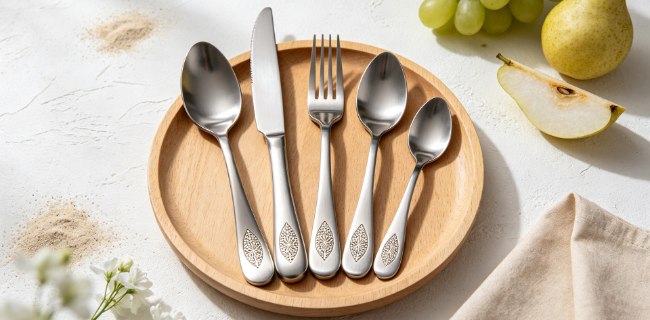
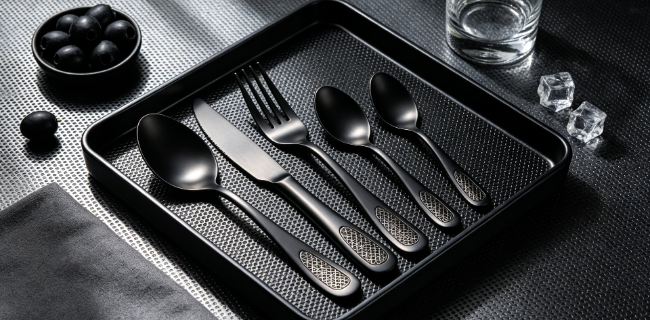
When sourcing a stainless steel cutlery set, buyers need to consider more than the appearance of individual knives, forks, and spoons. The number of pieces, utensil combinations, serving accessories, packaging format, and target retail price all influence the final product configuration.
For importers, retailers, hospitality suppliers, and private label brands, a clearly defined set configuration helps simplify quotations, sample approval, inventory planning, and bulk purchasing. Homefelt factory specializes in stainless steel cutlery manufacturing and supports OEM/ODM development, customized designs, wholesale orders, and large-volume production.
Start with the Intended Use of the Cutlery Set
The first step is identifying who will use the set and where it will be sold. Different markets have different expectations for the number and type of utensils included.
A household dining set may contain dinner knives, dinner forks, tablespoons, and teaspoons. A larger retail package may add dessert forks, dessert spoons, or serving utensils. Hospitality buyers may prefer individual replacement pieces or coordinated sets designed for restaurant operations.
Before selecting a configuration, consider:
Target users and dining habits
Number of place settings required
Types of meals and serving occasions
Expected retail or wholesale price range
Packaging size and shelf presentation
Availability of matching replacement pieces
These factors help determine which utensils should be included and which optional pieces can be offered as separate products.
How Piece Count Affects Purchasing Decisions
Piece count is one of the most visible specifications on a cutlery set package. However, buyers should distinguish between the total number of utensils and the number of complete place settings.
For example, a set described as a 24-piece configuration might contain six dinner knives, six dinner forks, six tablespoons, and six teaspoons. In this example, the set provides six place settings with four utensils per setting.
A different 24-piece set could contain a different combination, so the total number alone does not communicate the full product offering.
When requesting a quotation, specify the quantity of each utensil rather than relying exclusively on the package's piece-count description. This helps prevent misunderstandings between the product listing, quotation, approved sample, and final carton.
For private label projects, the package should clearly communicate the number of utensils and place settings, using a description that accurately matches the contents.
Selecting the Right Knife, Fork, and Spoon Combination
A balanced configuration should reflect practical use while maintaining a consistent appearance across all included items.
Dinner knives and forks form the foundation of many dining sets. Tablespoons and teaspoons provide additional functionality, while dessert utensils or serving pieces can help differentiate premium collections.
When choosing individual components, buyers should review:
Overall length and proportions
Handle shape and decorative style
Material grade and documented composition
Product weight and dimensional tolerances
Surface finish and polishing consistency
Suitability for the intended dining application
The knife, fork, and spoon do not necessarily need identical construction details, but the complete collection should have a coordinated visual identity. Material and performance requirements should be confirmed for each item.
Homefelt factory can work with buyers to develop coordinated cutlery combinations according to product positioning, order quantities, and target-market requirements.
Material and Specification Consistency Across the Set
Stainless steel grades such as 18/10, 18/8, and 18/0 are commonly specified for flatware. Buyers should confirm the material composition and the suitability of the selected grade rather than making decisions based only on a commercial label.
For each utensil, a product specification sheet should identify the relevant material, dimensions, thickness where applicable, weight, finish, and acceptable tolerances.
A configuration table is particularly useful for multi-piece sets.
| Item | Information to confirm |
|---|---|
| Dinner knife | Blade design, length, handle construction, finish |
| Dinner fork | Tine configuration, length, handle dimensions |
| Tablespoon | Bowl dimensions, depth, overall length |
| Teaspoon | Bowl size, handle proportions, product weight |
| Serving utensil | Intended function, dimensions, material |
| Packaging | Set quantity, insert layout, carton specifications |
The actual specifications should be approved for the selected design. Maintaining a clear record for each item also helps with repeat orders and product replacement.
Packaging Design and Retail Presentation
Packaging influences shipping efficiency, product protection, and the customer's first impression. A cutlery set intended for supermarket shelves may require compact retail packaging, while a gift collection may benefit from a presentation box with an organized insert.
Wholesale and hospitality orders may use bulk packaging to simplify storage and distribution.
When developing packaging, buyers should consider the following details:
Box dimensions and the arrangement of each utensil
Protection against scratches during transportation
Product descriptions and piece-count accuracy
Logo placement, colors, and printed artwork
Barcode and carton-marking requirements
Packaging materials and destination-market requirements
For customized orders, artwork and packaging dimensions should be finalized after the product configuration is confirmed. Changes to the number of pieces can affect the insert design, box size, packing labor, and shipping volume.
OEM and ODM Customization for Different Customer Needs
OEM manufacturing is suitable for buyers who already have established designs, drawings, or approved samples. ODM development is useful when a customer wants to create a new cutlery collection with support from the manufacturer.
Homefelt factory supports customized stainless steel knife, fork, and spoon products, including coordinated designs, branding, packaging, and private label development.
A typical project can follow these steps:
Define the target market and intended use.
Confirm the number of place settings and each utensil quantity.
Select materials, dimensions, and surface finishes.
Review product and packaging samples.
Approve the final specifications and quotation.
Establish production, inspection, packing, and shipping arrangements.
This process helps buyers evaluate the complete offering before committing to mass production.
Quality Control for Multi-Piece Cutlery Sets
A cutlery set contains several individual products, so quality control must address both individual items and the finished package.
Each utensil should be checked against its approved specifications. Depending on the project, inspections may include dimensions, weight, surface appearance, edge finishing, material documentation, and relevant product tests.
The finished set also requires quantity verification. A package can contain well-finished utensils yet still fail customer expectations if one spoon is missing or the wrong item is included.
For bulk production, buyers should agree on inspection procedures and acceptance criteria in advance. Checks can cover component quantities, packaging accuracy, carton labels, and visible damage. Where required, material records, factory audit documents, and product testing reports should also be reviewed for relevance and validity.
Clear inspection requirements provide a consistent basis for evaluating production batches and handling potential quality issues.
A Practical Example: Developing a Retail Cutlery Collection
Consider a retailer preparing to launch a private label dining collection. The original concept includes a dinner knife, dinner fork, tablespoon, and teaspoon for each place setting.
During product development, the buyer decides to offer a premium version with dessert utensils and a presentation box. Rather than changing the product informally, the team updates the configuration sheet, calculates the revised piece count, reviews the packaging layout, and requests an updated quotation.
The final sample is then checked against the revised product list and packaging design before bulk production approval.
This type of planning helps align purchasing, product presentation, and manufacturing requirements while reducing the likelihood of avoidable packing errors.
Plan Your Wholesale Cutlery Project with Homefelt
A well-planned stainless steel cutlery set combines the right utensil selection, consistent product specifications, practical packaging, and reliable manufacturing controls. For B2B buyers, documenting these details makes it easier to compare quotations and manage large-volume orders.
Homefelt factory offers stainless steel cutlery customization, OEM/ODM manufacturing, private label services, wholesale supply, and bulk production. Customers can discuss product design, packaging, and transportation as part of a one-stop service tailored to their project requirements.
To begin your project, prepare the intended set configuration, number of place settings, material preferences, target price range, packaging requirements, and estimated order quantity. Contact Homefelt to request a quotation and confirm the specifications for sampling and production.
You May Be Interested In
Custom Stainless Steel Cutlery Set Manufacturing
Wholesale Knife, Fork, and Spoon Collections
Private Label Flatware Packaging Solutions
OEM/ODM Cutlery Development for Retail Brands
Bulk Stainless Steel Flatware Supply
Visit https://www.huabao-homecollection.com/ to explore Homefelt's stainless steel cutlery products and discuss your next wholesale or customization project.