

20 May
Stainless Steel Cutlery Packaging Inserts and Product Protection
Stainless Steel Cutlery Packaging Insert...
Stainless Steel Cutlery Packaging Inserts and Product Protection
For importers, wholesalers, and private label brands, packaging is an important part of a stainless steel cutlery order. Even when spoons, forks, and knives meet the required specifications, unsuitable packaging can lead to scratches, movement inside the box, or damage during transportation.
A well-planned packaging design protects the products, supports an organized presentation, and helps buyers prepare their cutlery collections for retail or commercial distribution. Homefelt factory supports customized stainless steel cutlery manufacturing and packaging coordination for OEM, ODM, wholesale, and bulk orders.
Why Packaging Inserts Matter
Packaging inserts keep individual utensils in their intended positions and help prevent excessive movement during handling and shipping.
Depending on the packaging format, inserts may be made from paperboard, molded pulp, plastic, or other suitable materials. The appropriate option depends on the product finish, packaging budget, environmental requirements, and intended sales channel.
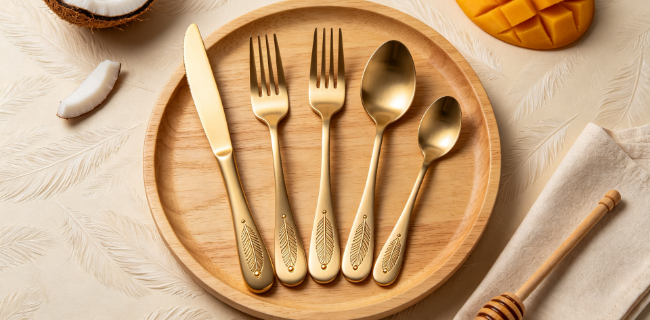
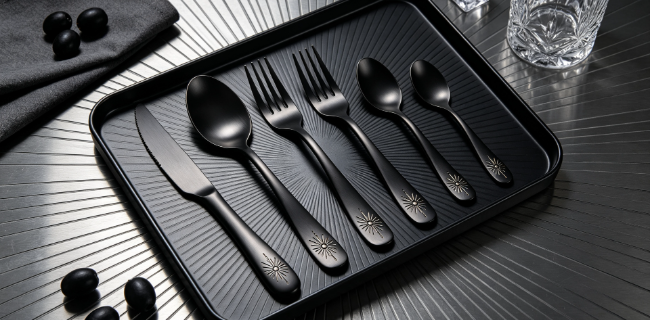
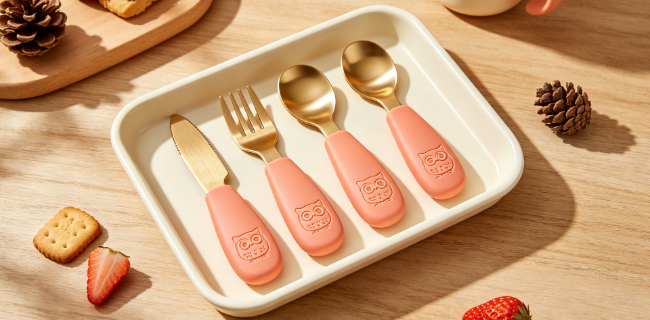
For a retail cutlery set, a fitted insert can separate the spoons, forks, and knives while creating a neat product presentation. For bulk commercial orders, simpler internal separators or protective arrangements may be more practical.
The main objective is to select packaging that provides adequate protection while meeting the buyer's cost and presentation requirements.
Four Packaging Details Buyers Should Confirm
1. Individual Product Protection
Stainless steel surfaces can develop scratches when utensils rub against one another during handling. This is particularly important for highly polished products, where visible marks may affect their appearance.
Depending on the product and shipping conditions, individual sleeves, protective films, paper separators, or other suitable materials may be considered.
Buyers should confirm whether protective materials are compatible with the product finish and whether they need to be removed before use.
2. Insert Layout and Product Separation
The insert should match the number, shape, and dimensions of the utensils included in the set.
A box designed for four product types may not fit an assortment containing additional teaspoons or serving utensils. The insert layout should therefore be developed using the approved product dimensions and final assortment.
For customized cutlery sets, buyers should review the placement of each item before approving the packaging sample.
3. Box Dimensions and Internal Space
The packaging should provide enough room for the products and protective materials without allowing excessive movement.
An oversized box may increase shipping volume, while an undersized box may place pressure on the utensils or packaging insert.
Confirm the internal dimensions, product arrangement, insert thickness, and closure method before mass production. The final packaging sample should be tested for practical fit and handling.
4. Outer Carton Protection
Retail packaging is only one part of the shipping arrangement. Outer cartons must also suit the weight, quantity, and transportation conditions of the order.
Buyers should confirm carton dimensions, packing quantity, carton strength, labeling, and palletization requirements where applicable.
For international shipments, packaging should be reviewed as part of the complete logistics plan rather than considered separately from transportation.
Choosing Packaging for Different Sales Channels
Different B2B customers have different packaging priorities.
Retail brands may require printed boxes, product inserts, branded labels, and a presentation that supports shelf display or online product photography.
Giftware distributors may prefer more decorative packaging, while restaurant suppliers often prioritize efficient storage, straightforward handling, and practical carton quantities.
For example, a private label brand launching a 24-piece stainless steel cutlery set may require a fitted insert and printed retail box. A commercial distributor ordering loose spoons and forks may instead choose protective bulk packaging designed for efficient transport and storage.
Both approaches can be appropriate when they match the buyer's distribution model.
Information Needed for a Packaging Quotation
To develop suitable packaging, buyers should provide more than the product name and order quantity.
A practical packaging brief can include:
Product assortment and piece count
Dimensions of each spoon, fork, and knife
Surface finish and protection requirements
Preferred box style and material
Insert layout and individual wrapping preferences
Logo, printing, labeling, and barcode requirements
Units per retail box and cartons per shipment
Destination market and transportation requirements
If sustainability requirements apply, buyers should also identify any requested material restrictions or packaging documentation.
Providing this information early helps the manufacturer assess feasibility and prepare a more relevant quotation.
How to Check Packaging Samples Before Bulk Production
Packaging approval should cover both appearance and practical protection.
First, place the approved utensils inside the sample box and check whether each item fits its designated position. Confirm that the lid closes properly and that no product is forced into an unsuitable space.
Next, inspect whether the insert prevents unnecessary movement and whether the protective materials are appropriate for the selected surface finish.
Buyers should also review printed colors, logos, product labels, and carton markings against the approved artwork.
Where appropriate, handling or transport simulation tests can help assess whether the packaging provides sufficient protection. The specific method should reflect the product, packaging design, and shipping conditions.
Any necessary adjustments should be finalized before the packaging enters mass production.
Integrating Packaging with Cutlery Manufacturing
Packaging decisions can affect product development, cost planning, packing efficiency, and shipping arrangements. Coordinating these details with the cutlery specifications helps reduce revisions later in the project.
For example, a buyer changing the handle design or adding serving utensils may need to revise the insert layout. If the packaging has already been produced, the change could result in additional cost or delays.
Homefelt factory can coordinate cutlery specifications, customized packaging, and production requirements as part of an OEM or ODM project. Buyers can provide reference samples, technical drawings, target quantities, packaging concepts, and branding requirements for assessment.
The factory can also coordinate transportation arrangements according to the agreed project scope.
Product quality inspections, packaging checks, and relevant material documentation should be confirmed separately according to the requirements of the actual order.
Build a More Reliable Cutlery Packaging Plan
Good packaging combines product protection, practical handling, and an appropriate presentation. By confirming insert dimensions, individual protection, box layout, carton specifications, and shipping requirements before production, buyers can reduce avoidable packaging problems and improve order consistency.
For importers, retailers, hospitality suppliers, and private label brands, packaging should be treated as part of the cutlery specification from the beginning.
You May Be Interested In
Explore stainless steel cutlery sets for retail and commercial distribution.
Discuss customized packaging inserts and branded boxes with Homefelt factory.
Request OEM or ODM quotations for wholesale spoons, forks, knives, and complete sets.
Ask about bulk production, packaging coordination, and international shipping arrangements.
Contact Homefelt with your cutlery assortment, packaging concept, target quantity, and destination market to discuss a suitable manufacturing and packaging solution.