

19 May
Stainless Steel Cutlery Set Piece Count and Assortment Planning
Stainless Steel Cutlery Set Piece Count ...
Stainless Steel Cutlery Set Piece Count and Assortment Planning
When sourcing stainless steel cutlery sets, buyers need to consider more than the appearance of individual spoons, forks, and knives. The number of pieces in each set, the combination of utensil types, and the packaging configuration all affect product positioning, purchasing costs, and suitability for different sales channels.
For importers, wholesalers, retailers, and hospitality suppliers, a clearly planned assortment helps ensure that the finished product meets customer expectations. Homefelt factory supports customized stainless steel cutlery sets through OEM and ODM manufacturing, including product design, packaging coordination, and bulk production planning.
Why Piece Count Matters
The piece count determines how many utensils are included in a retail set or commercial package. Different buyers may require different combinations depending on their target market and intended use.
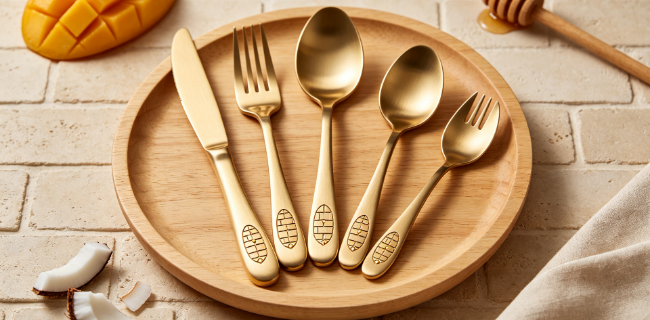
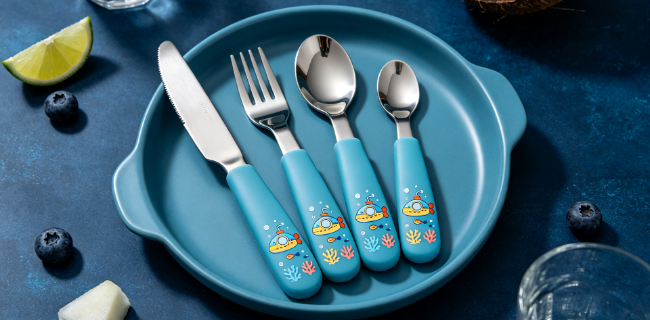
A retail cutlery set might include dinner spoons, dinner forks, table knives, and teaspoons. A hospitality buyer may prefer larger quantities of individual utensils for replenishment, while a distributor may need multiple packaging formats for different customer groups.
The important point is to define the assortment according to the purchasing objective rather than choosing a set solely by its total piece count.
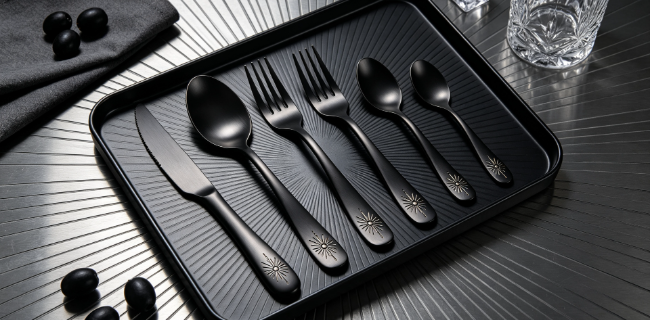
For example, two cutlery sets may both contain 24 pieces but include different combinations of spoons, forks, knives, and serving utensils. Buyers should check the actual contents before comparing quotations.
How to Plan a Suitable Assortment
1. Identify the Intended User
Start by determining whether the set is intended for household retail, hospitality supply, restaurant distribution, or another commercial channel.
Retail customers may prefer a complete set for a defined number of people. Commercial buyers may instead need standardized individual utensils that can be replenished separately.
This decision helps establish the appropriate product combination and packaging requirements.
2. Confirm the Number of Each Utensil
Prepare a list of every product type and its quantity. Avoid relying on a general description such as a complete dinner set.
A specification might identify dinner spoons, teaspoons, dinner forks, and table knives separately. If serving utensils are included, list each type and quantity.
This makes the assortment easier to verify during sampling, packing, and final inspection.
3. Coordinate Product Dimensions
Each utensil should meet its own dimensional requirements while remaining visually consistent with the collection.
Relevant parameters include overall length, handle width, material thickness, product weight, and surface finish. The exact measurements should be defined in the approved product drawings or specifications.
When a collection includes several spoon sizes or different knife designs, each item should have a separate specification.
4. Match the Packaging to the Set
Packaging should protect the products and present the assortment clearly. Options may include retail boxes, gift packaging, protective sleeves, inserts, and bulk cartons.
Buyers should confirm the internal layout, product arrangement, labeling, carton dimensions, and any branding requirements before production.
Packaging decisions can also influence shipping volume and the final quotation, so they should be considered early in the project.
Important Product Parameters for Cutlery Sets
A well-prepared product specification gives the manufacturer a clear reference for sampling and production.
For stainless steel cutlery, buyers should confirm:
Product types and quantities included in each set
Stainless steel grade and applicable material requirements
Overall dimensions of each utensil
Thickness and weight requirements where applicable
Handle design and surface finish
Logo application and decorative details
Packaging materials and retail presentation
Carton quantity, labeling, and transportation requirements
For sets with multiple materials or assembled components, the specification should identify the requirements for each relevant component.
Material verification, product testing, and inspection records can support quality assessment. Buyers should confirm which certifications and test reports apply to their products and destination markets rather than assuming that every document covers the entire assortment.
Sample Approval Before Bulk Production
Before approving a cutlery set, buyers should review the complete assortment rather than evaluating only one spoon or fork.
Check that the specified pieces are present and that each item matches its approved dimensions, material, and finish. Confirm that the handle styles coordinate across the collection and that the knives, forks, and spoons fit the intended packaging.
A practical sample review can also include checking the arrangement inside the retail box, protective packaging, product labeling, and carton configuration.
For example, a retailer developing a 24-piece private label set may require a specific combination of four utensil types. If the packaging insert is designed for a different assortment, the products may not fit as intended even when the individual utensils meet their specifications.
Confirming the product list and packaging layout together helps reduce costly revisions.
Managing Consistency Across Large Orders
For bulk production, assortment control is just as important as product quality. Even if every utensil meets its own specification, an incorrect quantity or missing item can make a finished set incomplete.
A production plan should identify the approved assortment, packing sequence, labeling requirements, inspection checkpoints, and final carton configuration.
Depending on the project, buyers may request packing-list verification, sampling inspections, or pre-shipment inspection records. These checks help confirm that the finished order matches the agreed requirements.
Homefelt can coordinate product specifications, packaging arrangements, and agreed inspection procedures as part of a customized manufacturing project.
How Homefelt Supports OEM and ODM Cutlery Sets
Homefelt factory works with B2B buyers seeking customized stainless steel cutlery sets for wholesale, retail, hospitality, and private label distribution.
OEM and ODM projects may include utensil selection, product dimensions, handle styling, surface finishes, logo application where suitable, and customized packaging. Customers can provide reference images, technical drawings, target quantities, market positioning, and packaging concepts to support project assessment.
For example, a distributor may require one assortment for retail gift boxes and another for hotel supply, while using coordinated product designs across both collections.
Homefelt can coordinate product design, packaging development, production planning, and transportation arrangements through a one-stop service according to the agreed project scope.
Clear assortment details help the factory assess production requirements and prepare a more accurate quotation.
Make Your Cutlery Set Easier to Source
Successful cutlery set development starts with a clear definition of the products included, the quantity of each item, the required dimensions, and the packaging format.
By confirming these details before sample approval, buyers can compare quotations more accurately, reduce packing errors, and establish consistent requirements for large-volume orders.
You May Be Interested In
Explore stainless steel cutlery sets and individual utensil designs.
Discuss customized set combinations with Homefelt factory.
Request OEM or ODM quotations for wholesale cutlery collections.
Ask about private label packaging, bulk production, and inspection arrangements.
Contact Homefelt with your desired piece count, utensil combination, material requirements, target order quantity, and packaging preferences to discuss your next cutlery project.