

28 May
Stainless Steel Cutlery Handle Patterns for Custom Product Development
Stainless Steel Cutlery Handle Patterns ...
Stainless Steel Cutlery Handle Patterns for Custom Product Development
The handle is one of the most recognizable features of stainless steel cutlery. Its outline, decorative details, proportions, and surface treatment help define the appearance of a spoon, fork, or knife. For retailers, importers, and private label brands, selecting the right handle pattern can help establish a distinctive product identity while keeping the collection suitable for its intended market.
Handle design also affects manufacturing requirements. A pattern that looks simple in a drawing may require additional forming, polishing, or inspection considerations when translated into a finished product. Homefelt factory supports B2B stainless steel cutlery projects, including OEM, ODM, custom design, wholesale, and bulk production.
Choosing a Handle Pattern for Your Target Market
Different markets favor different visual styles. Some buyers prefer clean, understated handles for everyday dining collections, while others look for decorative edges, geometric details, or more distinctive shapes for premium retail ranges.
The choice should reflect the intended customer, product positioning, and relationship between the handle and the rest of the cutlery piece.
Common design directions include:
Minimalist handles with smooth, simple outlines.
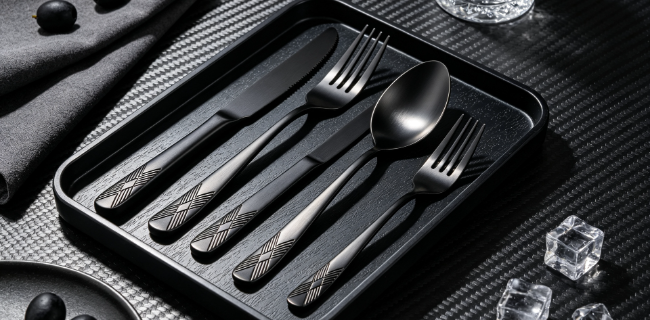
Geometric patterns with defined lines and angles.
Traditional decorative designs with ornamental details.
Textured or patterned surfaces that create visual contrast.
Custom shapes developed around a buyer's brand identity.
These categories are starting points rather than fixed manufacturing standards. Buyers should communicate the intended appearance through reference images, drawings, or physical samples.
It is also important to evaluate the handle as part of the entire item. A highly decorative handle may not suit a spoon bowl or knife profile with a very modern appearance. Coordinating these elements helps the finished collection look intentional rather than assembled from unrelated designs.
Handle Shape and Proportions
The handle outline affects both visual balance and practical handling. Width, length, curvature, thickness, and the transition between the handle and functional head should be considered together.
For a spoon, the handle should complement the bowl without making the overall design appear disproportionate. For a fork, the handle should work with the head width and tine arrangement. A table knife may require separate consideration because its blade and handle construction can differ from those of a spoon or fork.
Useful design parameters include:
Overall product length and handle length.
Handle width at specified measurement points.
Thickness or cross-sectional profile.
Curvature and edge shape.
Transition details between the handle and head.
Target product weight, where required.
These values should be recorded in a technical drawing or specification sheet. A photograph can communicate style, but it may not provide enough information to reproduce a particular handle accurately.
For custom projects, buyers should identify which proportions must remain fixed and which may be adjusted during development.
Decorative Details and Surface Treatments
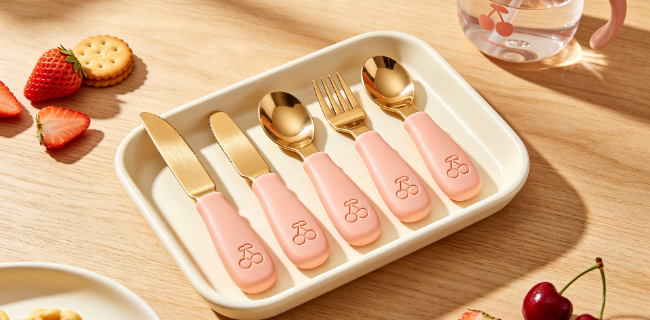
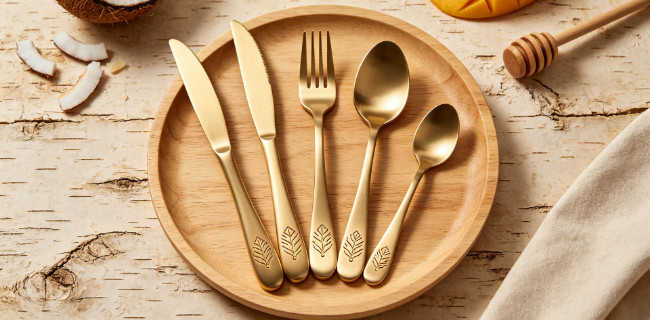
Decorative details can distinguish one handle pattern from another. Depending on the design, these may include raised elements, recessed lines, embossed motifs, geometric contours, or contrasting surface finishes.
Each detail should be evaluated for visual clarity and manufacturability. Fine lines may become less distinct after finishing, while intricate patterns can require additional attention during polishing and inspection.
The requested surface treatment also influences the final appearance. Mirror polishing produces a reflective surface, whereas satin or brushed finishing creates a more subdued effect. A decorative pattern may appear more or less prominent depending on how it interacts with light.
Buyers should avoid relying exclusively on digital renderings when judging these details. A physical sample allows the team to examine the actual pattern, reflection, edges, and surface consistency.
Where the design includes a logo or other branded element, confirm its position separately from the decorative pattern. The two features should not compete visually or reduce the clarity of the branding.
Material and Manufacturing Considerations
Handle design needs to work with the selected stainless steel specification and manufacturing process. Grades such as 304 and 430 stainless steel have different properties, and the appropriate selection depends on the product requirements, intended use, and target budget.
The handle's thickness, profile, and decorative features should be considered alongside the material specification. A complex design may require additional process review to determine whether the desired shape and surface quality can be achieved consistently.
Buyers should confirm the material grade, relevant thickness measurements, product dimensions, finish, and any special construction requirements before approving a design.
If a new pattern requires tooling or other development work, request clarification on the initial cost and whether it differs from the recurring manufacturing price. The factory should also identify any design limitations that may affect the expected appearance or production schedule.
For food-contact products, applicable material documentation and testing requirements should be confirmed according to the destination market and product scope.
Developing a Custom Handle Pattern
A structured design process can help turn an initial concept into a production-ready specification.
First, buyers provide reference images, sketches, existing products, or brand design guidelines. The factory reviews the concept and identifies the key features that need to be defined.
Next, the design is translated into measurable specifications. This may include the handle outline, width, thickness, decorative details, surface finish, and relationship to the spoon bowl, fork head, or knife blade.
A sample is then evaluated against the agreed requirements. If the pattern needs adjustment, the requested changes should be recorded clearly, preferably with marked-up drawings or photographs.
After approval, the final design revision should be retained as the reference for manufacturing. Any later modification should be documented so that outdated artwork or drawings are not used accidentally.
For buyers developing several related products, the same process can establish a consistent design language across dinner spoons, teaspoons, forks, and knives.
Sample Inspection for Handle Quality
Handle inspection should consider appearance, dimensions, workmanship, and consistency with the approved reference.
Review the outline and proportions first. Then check for visible defects such as scratches, uneven polishing, unwanted marks, rough edges, or inconsistencies in decorative details.
Where dimensional requirements have been specified, use the agreed measurement points and inspection method. The acceptable tolerances should be defined for the individual product rather than assumed to be identical across every model.
For a complete cutlery set, compare the handles side by side under consistent lighting. This makes differences in finish, pattern clarity, and visual proportions easier to identify.
The inspection plan may also include checks for material specifications, packaging accuracy, and relevant product documentation. Material certificates and testing reports should be reviewed within their stated scope and should not be treated as substitutes for checking finished-product workmanship.
Maintaining Consistency in Bulk Orders
A handle pattern approved for sampling must be translated into clear production references. The specification should identify the product model, drawing revision, material, dimensions, finish, and any decorative or branding requirements.
For large-volume orders, buyers should agree on how the factory will inspect appearance and dimensions, record results, and handle products that do not meet the specification.
If several cutlery models share similar handles, each model should have a clear reference number. This reduces the risk of confusing patterns or applying the wrong finish to a related item.
Repeat orders benefit from retaining the approved sample or reference photographs together with the final drawings and quality requirements. When a change is necessary, the buyer and factory should confirm the revised specification before production proceeds.
This approach supports a more consistent product range and makes future replenishment easier to coordinate.
OEM and ODM Handle Design with Homefelt Factory
Homefelt factory works with B2B customers seeking stainless steel spoons, forks, knives, and complete cutlery collections. Depending on the project, cooperation may include selecting existing handle patterns, refining product designs, developing customized specifications, and coordinating private label packaging.
OEM projects can follow buyer-provided drawings and requirements. ODM projects may involve further design development based on the target market and product concept. Wholesale and bulk buyers can also discuss existing patterns that suit their product range without requiring a completely new design.
To prepare a useful inquiry, provide the target product type, design references, material grade, surface finish, estimated quantity, and packaging expectations. If the handle must match an existing collection, include the relevant sample or specification.
Homefelt can review the project requirements and discuss available customization and production options. Certifications, material records, and product testing documentation should be confirmed according to the specific products and destination-market requirements.
A well-developed handle pattern combines visual identity with practical manufacturing considerations. By defining the shape, dimensions, finish, and inspection criteria before bulk production, buyers can create stainless steel cutlery that is easier to reproduce and maintain across future orders.
You May Be Interested In
Explore stainless steel cutlery patterns for retail and hospitality collections.
Discuss custom handle designs for OEM and ODM projects.
Request private label options for spoons, forks, and table knives.
Contact Homefelt factory for customized specifications and bulk quotations.
When contacting the factory, share your reference design, product list, estimated quantities, material requirements, and preferred finish. These details help establish a clear starting point for handle development, sample evaluation, and production planning.