

21 May
Stainless Steel Cutlery for Restaurant Chains and Dining Groups
Stainless Steel Cutlery for Restaurant C...
Stainless Steel Cutlery for Restaurant Chains and Dining Groups
Restaurant groups often need to balance dining presentation with the practical demands of everyday service. A single location may use hundreds or thousands of pieces, while a restaurant group can require the same collection across several locations.
Stainless steel cutlery can provide a practical foundation for these dining environments. However, selecting the right collection requires attention to more than the basic fork, knife and spoon combination.
Design, weight, finish, table setting, replacement and purchasing continuity can all influence the final choice.
For restaurant owners, purchasing teams, distributors and hospitality suppliers, a clear product plan can make both the first order and future replenishment easier.
Match Cutlery With the Restaurant Concept
The dining environment should be the starting point.
A casual restaurant may benefit from a simple collection that works naturally with everyday table settings.
A fine dining restaurant may require more refined proportions and a stronger visual presence.
A restaurant group with several concepts may need different collections while maintaining a consistent purchasing process.
The cutlery should complement the restaurant rather than compete with the food, plates or interior design.
Consider the Complete Table Setting
Cutlery is only one part of the table.
The final appearance depends on how it works with plates, glasses, napkins and serving pieces.
A polished stainless steel collection can create a brighter appearance, while a softer finish may suit a more contemporary environment.
Before confirming a collection, restaurant buyers can place samples together with the actual tableware.
This simple comparison can help identify whether the proportions and finish are suitable.
Choose Practical Product Proportions
Forks, knives and spoons need to feel balanced when used during a meal.
Handle length and thickness can influence both appearance and comfort.
A larger handle may create a stronger premium impression, while a slimmer profile may suit a minimalist table.
The best choice depends on the restaurant concept and customer expectations.
Physical samples are particularly useful because photographs cannot fully communicate the feel of a product.
Balance Appearance and Daily Use
Restaurant cutlery may be handled many times during a normal service period.
After collection from tables, the products may be sorted, cleaned, inspected and returned to service.
A practical design can make these processes easier.
Highly detailed products may create a distinctive appearance, but restaurant operators should also consider whether the design fits their daily handling procedures.
A collection that looks good and remains practical during busy service can provide greater value over time.
Select a Suitable Surface Finish
Finish is one of the easiest ways to change the character of a stainless steel collection.
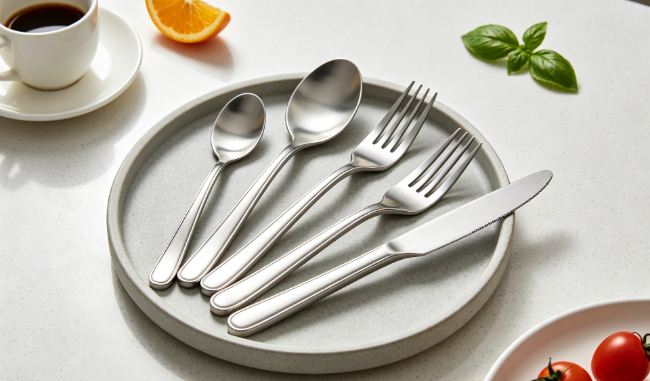
Polished surfaces can create a classic restaurant appearance.
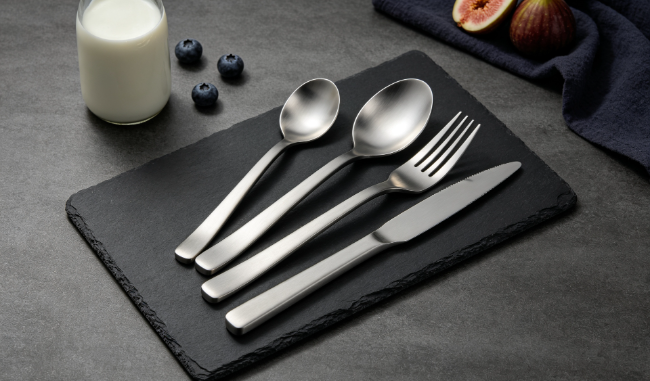
Satin or brushed finishes can provide a more understated style.
Some restaurant concepts may benefit from special finishes that create a stronger visual identity.
The finish should be reviewed under the restaurant's actual lighting where possible.
A sample on a dining table can provide a much better impression than a digital image.
Plan Quantities by Restaurant
For a restaurant group, quantity planning should be carried out location by location.
Each restaurant may have different seating capacity and service patterns.
A useful purchasing calculation can consider:
Number of seats
Number of daily services
Average table turnover
Number of dining areas
Cleaning and turnaround time
Reserve stock
Expected replacement
The total quantity can then be calculated for each individual product.
This avoids situations where the number of forks is significantly higher than the number of matching knives and spoons.
Keep Extra Pieces for Replacement
Replacement is a normal part of restaurant operations.
Individual pieces may become unavailable because of loss, damage or unexpected inventory differences.
Keeping reserve stock allows staff to replace individual pieces without changing the complete table setting.
For restaurant groups, reserve inventory can also be distributed between locations according to actual usage.
High-volume restaurants may require more replacement stock than smaller locations.
Standardize Across Restaurant Locations
Restaurant groups can benefit from using the same cutlery collection across multiple locations.
Standardization can simplify:
Purchasing
Storage
Staff training
Inventory transfers
Replacement
Supplier communication
When the same product is used at several locations, surplus stock from one restaurant may also be easier to transfer to another.
This can provide additional flexibility during busy periods.
Different Collections for Different Concepts
Standardization does not mean every restaurant must use exactly the same product.
A group may operate casual dining restaurants, premium restaurants and specialty concepts.
Each concept can have its own collection while the purchasing process remains centralized.
The buyer can maintain separate product codes and approved samples for each concept.
This creates a clear connection between the restaurant concept and the physical products used at each location.
Consider Serving Pieces
A restaurant cutlery project may eventually extend beyond the standard dining set.
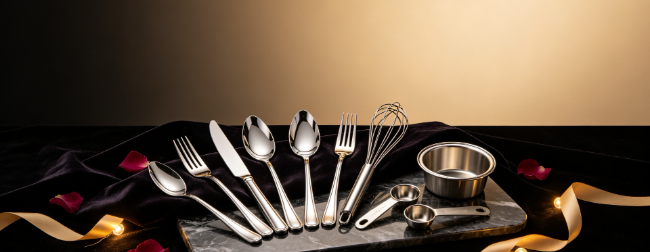
Depending on the menu and service style, the collection may include serving spoons, serving forks, dessert pieces or specialty utensils.
Using a related design across these products can create a more complete table setting.
When developing a new collection, buyers can consider possible future additions before finalizing the main handle design.
Packaging for Restaurant Supply
Restaurant groups normally have different packaging needs from retail customers.
Bulk cartons are often more practical for larger orders.
The products should be packed in a way that allows warehouse staff to count and distribute them efficiently.
Carton labels can include product codes, quantities and other agreed references.
For restaurant groups with centralized purchasing, consistent carton identification can simplify distribution to different locations.
Product Codes Make Reordering Easier
A clear product code should remain connected to the physical product.
The code can appear in:
Purchase orders
Packing lists
Carton markings
Inventory records
Supplier quotations
Using the same reference throughout the purchasing process reduces the possibility of ordering a similar but incorrect product.
This becomes increasingly useful when a restaurant group operates several cutlery collections.
Consider Long-Term Availability
A restaurant may use the same cutlery for many years.
If a collection is replaced too quickly, later replacement orders may no longer match the original products.
For this reason, buyers should discuss future availability with the manufacturer.
An approved sample and complete product specification can be retained as a reference.
For restaurant groups, this information can become part of the purchasing record for each dining concept.
Custom Cutlery for Restaurant Brands
Some restaurant groups want their tableware to reflect their own brand identity.
A custom handle, finish or logo can create a more distinctive appearance.
The customization should be evaluated together with the complete table setting.
For a branded project, buyers should approve the physical sample before mass production.
This gives the restaurant team an opportunity to check the design under actual dining conditions.
Private Label Opportunities
Restaurant groups may also develop their own branded tableware collections for wider use.
The same product concept can potentially be used across restaurants, retail channels or hospitality supply programs.
A consistent product specification can help maintain the same appearance as the collection expands.
Packaging and branding can then be developed around the approved product.
Working With an Experienced Manufacturer
A restaurant group often needs a supplier that can support both initial production and later replenishment.
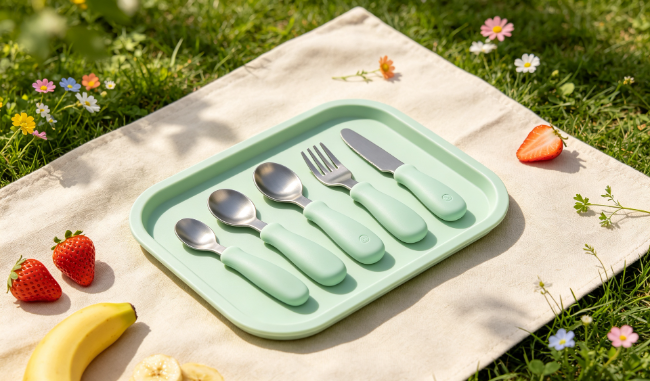
Homefelt has more than 30 years of stainless steel manufacturing experience and produces stainless steel cutlery together with kitchen and dining products, BBQ tools, pet bowls and children's tableware.
For international B2B customers, Homefelt supports standard and customized stainless steel products.
Restaurant groups, hospitality distributors and foodservice purchasing companies can discuss product dimensions, material, finish, branding, packaging and expected quantities according to their requirements.
For larger programs, approved samples and product specifications can also be retained for future orders.
What Restaurant Buyers Should Prepare
Before requesting a quotation, buyers can prepare:
Restaurant concept
Number of locations
Seating capacity
Required product types
Estimated quantities
Material specification
Target weight
Surface finish
Branding requirements
Packaging preference
Reserve stock requirement
Expected future demand
This information can help the manufacturer understand the project more accurately.
Build a Collection That Can Grow
A restaurant group may expand over time.
New locations can create additional demand for the existing cutlery collection.
A well-defined product specification makes it easier to reproduce the same collection for future openings.
If new products are added later, the original handle design and finish can also provide a useful reference.
This approach can help maintain a consistent dining identity as the restaurant group grows.
Conclusion
Stainless steel cutlery for restaurant chains needs to combine attractive table presentation with practical daily use.
Restaurant buyers should consider the dining concept, product proportions, finish, quantity, replacement stock, packaging and long-term availability before selecting a collection.
For restaurant groups, standardizing products across locations can simplify purchasing and inventory management, while different collections can still be developed for separate dining concepts.
Homefelt has more than 30 years of stainless steel manufacturing experience and works with international wholesalers, retailers, distributors and hospitality suppliers on standard and customized stainless steel products.
By discussing the restaurant concept, expected usage and future purchasing requirements with the manufacturer, buyers can develop a cutlery collection that fits the dining environment and remains practical as the business expands.
You May Be Interested In