

18 May
Stainless Steel Coffee Spoons: Design and Sourcing for B2B Buyers
Stainless Steel Coffee Spoons: Design an...
Stainless Steel Coffee Spoons: Design and Sourcing for B2B Buyers
A coffee spoon is a small cutlery item, but its design contributes to the overall presentation of coffee service. For tableware brands, importers, café suppliers and distributors, selecting the right stainless steel coffee spoon means balancing practical dimensions, appearance, material specifications and purchasing requirements.
Homefelt factory supports B2B customers seeking stainless steel cutlery customization, OEM/ODM manufacturing and wholesale supply. Whether a buyer needs a simple coffee spoon for everyday use or a coordinated design for a branded tableware collection, defining the product requirements early helps make development and bulk purchasing more straightforward.
1. Matching Coffee Spoons to Their Intended Use
Coffee spoons are used in different settings, from household coffee service to cafés, hotels, office refreshment areas and retail tableware collections. Their size and appearance should reflect how the product will be used and presented.
For espresso service, buyers may prefer a compact spoon that sits neatly beside a small cup. For larger coffee cups, a slightly longer handle may be more practical. Retail collections may place greater emphasis on matching the spoon to the design of existing teaspoons, dessert spoons and other flatware.
Before selecting a product, buyers should clarify:
The type and approximate size of the cups with which the spoon will be used
Whether the product is intended for retail, commercial supply or a private-label collection
The preferred overall length and handle style
The desired finish and visual positioning
The estimated order quantity and repeat-purchasing needs
These details help the manufacturer understand the product's purpose instead of relying on a generic description such as “small spoon.”
2. Selecting the Right Spoon Length
Overall length is one of the first specifications to confirm. A coffee spoon should be proportionate to the cup and comfortable to handle, without appearing excessively large or too small for its intended use.
A compact design may suit espresso cups and limited table space. A longer design may work better with larger cups or deeper drinkware. The ideal dimensions depend on the customer's cup range, design preference and target market.
For product development, buyers can specify the overall length in millimeters and provide a drawing or reference sample. The manufacturer can then confirm other dimensions, including bowl length, bowl width and handle proportions.
A useful specification sheet should record the approved measurements rather than simply naming the product category. This is particularly important when several spoon sizes are included in one collection.
3. Bowl Shape and Stirring Function
The bowl should be designed for practical use as well as visual consistency. Its width, depth and curvature influence how the spoon looks beside a cup and how it feels during stirring.
A narrower bowl can create a delicate appearance, while a wider bowl gives the product a different visual balance. The bowl should also be proportionate to the handle; a small bowl paired with a broad handle may produce a different style from a narrow, elongated design.
When comparing samples, buyers can assess the following:
| Feature | What to Evaluate |
|---|---|
| Bowl width | Proportion relative to the cup and handle |
| Bowl depth | Suitability for stirring and ordinary spoon use |
| Bowl curvature | Appearance and consistency across the product range |
| Handle length | Reach and proportion for the intended cup size |
| Overall balance | Whether the complete spoon looks and feels coherent |
These design elements should be considered together. A spoon that looks attractive in a product image should still be reviewed as a physical sample before the specification is finalized.
4. Stainless Steel Grade and Surface Finish
Material details are important when sourcing coffee spoons for wholesale or private-label programs. Buyers should confirm the proposed stainless steel grade and relevant material documentation with the supplier. The selection should reflect the customer's product requirements, target price positioning and expected use.
Surface finish is another factor that influences the appearance of a coffee spoon. Mirror polishing creates a bright, reflective surface, while a satin or brushed finish offers a more restrained look. The appropriate option depends on the broader tableware collection and the buyer's design objectives.
For a coordinated range, it is helpful to establish one finish specification for all matching items. Buyers should review the spoon alongside the other cutlery products to check that the visual treatment is consistent.
If the project requires a particular finish, provide reference images or an approved sample and record the requirement in writing. This gives the factory a clearer standard for production and repeat orders.
5. Creating a Coordinated Coffee-Service Collection
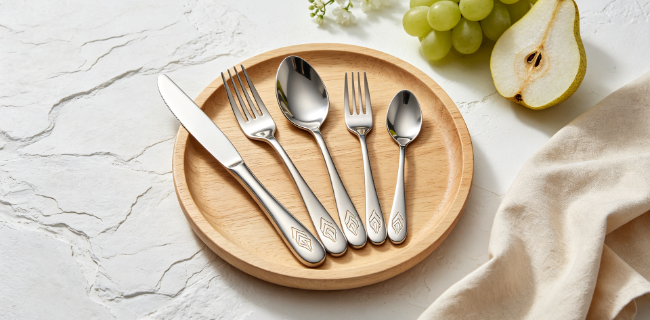
Coffee spoons are often purchased as part of a broader tableware program rather than as isolated items. A buyer may need matching teaspoons, dessert spoons, forks and knives for retail sets, hospitality supply or a private-label range.
The collection should have a consistent design language. Matching handle profiles, similar surface finishes and compatible proportions can help create a recognizable product family.
Buyers planning a collection should establish:
Which cutlery items are required
The dimensions and design references for each item
Whether all products should share the same handle style
The quantity required for each SKU
Whether branding or custom packaging is needed
The process for approving samples and future revisions
For private-label programs, branding and packaging specifications should be provided early so they can be reviewed alongside the product design. Any custom feature should be confirmed for feasibility before the bulk order is finalized.
6. OEM/ODM Production and Wholesale Planning
OEM and ODM projects can serve different purchasing needs. With OEM production, the buyer typically supplies a defined design or specification. With ODM development, the buyer may need assistance in refining the design and establishing a suitable product configuration.
Homefelt factory supports customized stainless steel coffee spoons and broader cutlery projects for importers, distributors, retailers and brands. Buyers can discuss product dimensions, material options, handle design, surface finish, logo requirements and packaging arrangements.
For a quotation, prepare as much of the following information as possible:
Product drawing, reference image or sample
Preferred stainless steel grade and finish
Required dimensions and estimated weight, if specified
Order quantity and assortment requirements
Logo, packaging and labeling details
Destination market and requested delivery schedule
Complete information helps the factory evaluate the project and identify details that need confirmation. If the design is still under development, buyers can begin with a product concept and estimated quantity, then work through the main specifications before sample approval.
7. Quality Review and Repeat Orders
For bulk purchasing, sample approval should establish a clear reference for the finished product. Buyers should confirm dimensions, surface appearance, handle shape and material requirements before authorizing mass production.
Depending on the project, supporting documents may include material information, product inspection records and applicable test reports. Homefelt has experience with company audit and certification programs such as BSCI, SEDEX 4P and ISO 9001. The specific documentation available and relevant to an order should be confirmed directly rather than assumed to apply automatically to every product.
For repeat orders, retaining the approved sample and final specification sheet helps both parties work from the same reference. If the buyer wants to change the length, finish or handle design, the revision should be documented and approved before the next production run.
Discuss Your Coffee Spoon Project with Homefelt
A well-selected coffee spoon combines suitable dimensions, a coherent design and clearly defined manufacturing specifications. For B2B buyers, working through these details before placing a bulk order can make product development and supplier communication more efficient.
Homefelt welcomes inquiries for stainless steel coffee spoons, custom flatware, OEM/ODM manufacturing and wholesale orders. Share your preferred design, estimated quantity and market requirements to discuss product options, customization, packaging and transportation as part of a coordinated service plan.
You May Be Interested In
Stainless Steel Dessert Spoons: Product Selection for Wholesale Buyers
Stainless Steel Spoon Weight: Balancing Comfort, Quality and Market Positioning
Stainless Steel Spoon Handle Design: Comfort, Balance and B2B Product Development