

19 May
Stainless Steel Soup Spoons: Bowl Design and Selection for B2B Buyers
Stainless Steel Soup Spoons: Bowl Design...
Stainless Steel Soup Spoons: Bowl Design and Selection for B2B Buyers
Soup spoons serve a different purpose from standard table spoons, and their bowl design plays a central role in product selection. For importers, distributors, tableware brands and catering suppliers, choosing a stainless steel soup spoon involves balancing bowl capacity, curvature, handle proportions, material specifications and the needs of the intended market.
Homefelt factory supports B2B customers looking for stainless steel cutlery customization, OEM/ODM manufacturing and wholesale supply. By defining the intended application and product requirements before production, buyers can develop soup spoons that fit their collections and purchasing plans.
1. What Makes a Soup Spoon Different?
A soup spoon is generally designed with a more pronounced bowl than a standard table spoon. The shape helps determine how the spoon holds liquid and how comfortably it can be used at the table.
Different markets may prefer different profiles. Some designs have a rounded, deeper bowl, while others feature a more elongated shape. Neither profile is universally suitable; the choice depends on the intended serving style, target customer and overall cutlery design.
When reviewing options, buyers should consider:
The type of soup or liquid-based dish the spoon is intended for
The bowl's width, depth and curvature
The relationship between the bowl and handle
The overall length and weight
Compatibility with the customer's existing cutlery collection
Defining these requirements makes it easier to compare products based on function rather than appearance alone.
2. Bowl Capacity and Curvature
Bowl capacity is an important design consideration because it affects how much liquid the spoon can hold during ordinary use. However, capacity should not be assessed separately from bowl shape.
Two spoons with similar external dimensions may have different usable capacities because their bowls have different depths and curvature. A wider, shallower bowl can look quite different from a more rounded bowl, even if their overall lengths are similar.
For product development, buyers can request the following information:
| Parameter | Why It Matters |
|---|---|
| Bowl length | Establishes the basic bowl proportion |
| Bowl width | Influences the available spooning surface |
| Bowl depth | Affects the bowl's profile and potential capacity |
| Overall length | Helps determine fit within a cutlery collection |
| Product weight | Supports product positioning and handling evaluation |
| Material grade | Defines the specified stainless steel composition |
If a particular capacity is required, it should be measured using an agreed method and recorded in the specification. Buyers should not assume that capacity can be determined accurately from a product photograph alone.
A physical sample can help confirm whether the selected shape meets the intended requirements before the order moves to mass production.
3. Handle Length and Practical Balance
The handle should complement the bowl in both appearance and use. A broad bowl paired with a very short handle creates a different proportion from a deep bowl with an elongated handle.
Handle design can also affect how the spoon feels in the hand. Width, thickness, taper and surface profile all contribute to the overall impression.
When selecting a soup spoon, purchasing teams should assess the complete product rather than focusing exclusively on the bowl. The spoon should feel reasonably balanced, and its handle should suit the intended use and design style.
For custom projects, buyers can provide a drawing, an existing product sample or reference images. These materials help the manufacturer understand the preferred proportions and reduce ambiguity during development.
4. Material Selection and Surface Appearance
Stainless steel grade should be clearly specified for wholesale and private-label orders. Buyers should confirm the proposed grade and relevant material documentation with the manufacturer instead of relying solely on broad descriptions such as “high-quality stainless steel.”
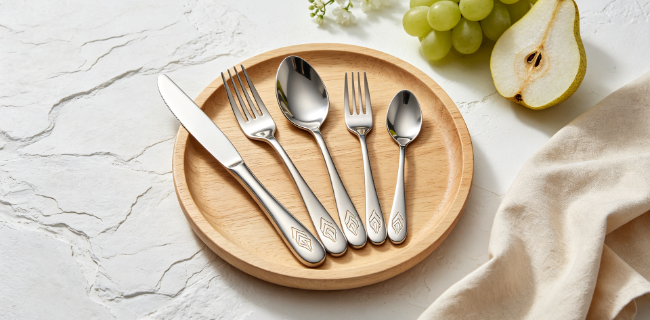
Surface finish is another factor that affects how a soup spoon fits into a cutlery range. Mirror-polished products have a bright, reflective appearance, while satin or brushed finishes offer a more subdued look. The appropriate option depends on the design brief and the other items in the collection.
For coordinated sets, buyers should establish a consistent finish reference for spoons, forks and knives where applicable. Samples should be reviewed under comparable lighting to evaluate surface appearance and consistency.
If the product requires a particular finish, include it in the specification and approve a physical sample before confirming the bulk order.
5. Developing a Coordinated Soup Spoon Range
Some buyers require one soup spoon model, while others need several sizes or designs for different customer groups. A coordinated range can help distributors offer a clearer product selection and enable private-label brands to maintain a consistent appearance.
Before developing multiple models, determine whether the differences should be functional, visual or both. For example, a collection may use the same handle design across several spoon types while adjusting bowl dimensions for different serving purposes.
A product schedule should identify:
Each model and its internal item code
Approved dimensions and material requirements
Bowl profile and handle design
Surface finish and appearance references
Quantity required for each model
Branding and packaging requirements
Keeping this information in one specification sheet helps buyers and manufacturers communicate clearly throughout development, sampling and repeat purchasing.
6. OEM/ODM Customization with Homefelt Factory
OEM projects are suitable for buyers who already have a defined design or technical specification. ODM projects may be more appropriate when a customer needs assistance developing a product concept into a manufacturable spoon design.
Homefelt factory supports customized stainless steel cutlery projects, including soup spoons, coordinated flatware and private-label products. Depending on the project, buyers can discuss product design, material options, handle profiles, finish selection, packaging and transportation requirements through a coordinated service process.
For a quotation, buyers should prepare as much of the following information as possible:
Product drawings, reference photographs or an existing sample.
Required dimensions, material grade and finish.
Estimated order quantity and product assortment.
Branding, packaging and labeling instructions.
Destination market and expected delivery schedule.
If some details are still undecided, buyers can start by sharing the intended application and approximate order volume. The next step is to review feasible options and agree on the specifications that must be confirmed before production.
7. Quality References for Bulk Orders
Before mass production, the approved sample and specification sheet should establish a common reference for the finished product. Relevant checks may include dimensions, bowl shape, surface appearance, handle consistency and material requirements.
Depending on the order, buyers may request applicable material documentation, inspection records and test reports. Homefelt has experience with company audit and certification programs including BSCI, SEDEX 4P and ISO 9001. Buyers should confirm which documents are relevant and available for their particular project; company audits should not be treated as automatic product approvals.
For repeat orders, retaining the approved sample and documenting any changes helps maintain a consistent product standard. If the bowl profile, handle shape or surface finish changes, the revised specification should be reviewed and approved before production proceeds.
Request a Soup Spoon Quotation
Selecting a suitable stainless steel soup spoon begins with understanding the intended use, confirming the bowl and handle proportions, and documenting the required material and finish. These steps give B2B buyers a clearer basis for comparing products and planning bulk purchases.
Homefelt welcomes inquiries from importers, distributors, retailers and tableware brands seeking custom soup spoons, OEM/ODM production and wholesale stainless steel cutlery. Share your specifications, reference images and estimated quantity to discuss product options, sampling, packaging and transportation.
You May Be Interested In
Stainless Steel Spoon Bowl Capacity: How B2B Buyers Compare Volume and Function
Stainless Steel Spoon Dimensions: A Practical Specification Guide for B2B Buyers
Stainless Steel Spoon Construction: Handle Joints and One-Piece Design Options