

03 May
Professional Stainless Steel Flatware for Restaurant Table Settings
Professional Stainless Steel Flatware fo...
Professional Stainless Steel Flatware for Restaurant Table Settings
Restaurant tableware is an important part of the dining experience. While food quality and service remain central to a restaurant's success, the table setting also influences how guests perceive the overall dining environment.
For restaurant groups, foodservice distributors and international B2B buyers, stainless steel flatware offers a practical way to combine everyday functionality with a consistent table presentation.
The right collection should fit the restaurant concept, menu, service style and purchasing strategy. A successful selection is not simply about choosing attractive forks, knives and spoons. It also involves evaluating dimensions, finish, inventory requirements, replacement planning and long-term availability.
Start With the Restaurant Concept
Every restaurant has its own identity.
A casual dining restaurant may prefer a simple and versatile collection.
A contemporary restaurant may choose a slimmer profile with a modern finish.
A fine dining establishment may require a more substantial design with carefully selected proportions.
The flatware should support the overall concept rather than compete with the food presentation.
Before requesting samples, purchasing teams can define the desired visual direction and dining atmosphere.
Match Flatware With the Menu
The menu can influence the required product range.
A restaurant serving steaks may need a suitable table knife.
A seafood restaurant may require additional utensils for particular dishes.
Dessert service may involve dedicated forks or spoons.
A broad menu can justify a larger collection, while a focused menu may only require several essential products.
Planning the product range around the actual menu can prevent unnecessary inventory.
Everyday Restaurant Service
Restaurants typically handle flatware continuously throughout the day.
Products move from dining tables to collection areas, then through cleaning and inspection before returning to service.
The selected collection should fit this cycle.
A practical design can make sorting easier and help staff prepare tables efficiently.
Restaurant managers should evaluate samples within their normal operating workflow before placing a large order.
Consider Guest Comfort
Flatware is one of the first physical items guests handle during a meal.
Handle length, thickness and balance can influence the overall dining experience.
A visually attractive design should also feel natural in the hand.
Different restaurant concepts may require different proportions.
For this reason, buyers should avoid choosing products based only on photographs or catalog dimensions.
Physical samples provide a better opportunity to evaluate comfort and balance.
Select the Appropriate Finish
The finish can have a strong influence on table presentation.
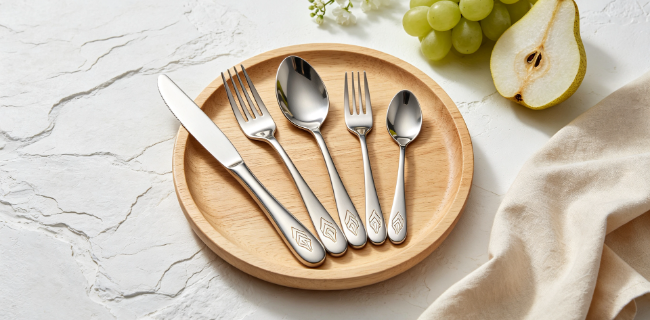
A bright polished finish can complement classic restaurant interiors.
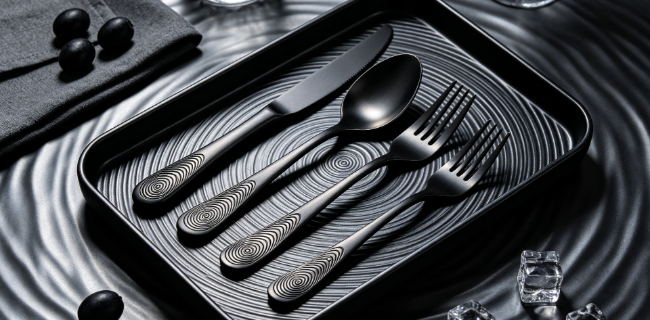
A softer satin surface can work with contemporary dining concepts.
A brushed finish may suit restaurants using natural materials and minimalist decoration.
The finish should be considered together with plates, glassware, table linens and furniture.
Coordinate the Complete Table Setting
Flatware should not be selected independently from the rest of the tableware.
The size of the fork, knife and spoon should look proportionate to the plates.
Handle shapes should complement the glassware and other dining accessories.
Restaurant buyers can create a sample table using their existing products and place several flatware options alongside them.
This simple comparison can make the final decision much easier.
Build a Core Product Range
A restaurant can begin with a core collection covering its most common service requirements.
The range may include:
Table fork
Table knife
Table spoon
Dessert fork
Dessert spoon
Teaspoon
Additional products can be introduced when required by the menu.
Keeping the core range focused can simplify ordering, storage and staff training.
Consider Different Dining Periods
Restaurants may have different service patterns during breakfast, lunch and dinner.
Breakfast can require smaller utensils for lighter meals.
Lunch and dinner may use the primary table setting.
Special evening menus may require additional products.
Purchasing teams should analyze actual service patterns before determining the total inventory.
Plan for Table Turnover
High-turnover restaurants may reuse the same flatware several times during a busy service period.
The required inventory therefore depends partly on cleaning speed and table turnover.
A restaurant with rapid turnover may need a larger reserve than a lower-volume operation.
Inventory planning should reflect the restaurant's busiest normal service rather than an average day alone.
Replacement Inventory
Flatware can gradually disappear from active inventory.
Pieces may be misplaced, damaged or removed from service for various operational reasons.
Maintaining replacement stock helps the restaurant continue using the same collection without changing individual pieces.
The purchasing department should keep the original product specifications and approved sample for future orders.
Standardization for Restaurant Groups
Restaurant groups often operate several locations with similar concepts.
A common flatware specification can simplify purchasing and inventory management.
The same product codes can be used across participating restaurants.
This also makes it easier to transfer stock between locations when appropriate.
Individual flagship restaurants can still use customized products when their concepts require a distinctive presentation.
Multiple Concepts Under One Brand
A restaurant group may operate casual, premium and specialty dining venues.
Using completely unrelated flatware collections can increase procurement complexity.
A more efficient approach can be to establish a common design language across the group while allowing different collections for individual concepts.
This creates visual flexibility without creating an unnecessarily complicated purchasing system.
Custom Restaurant Flatware
Restaurant brands may want distinctive products that support their identity.
Custom stainless steel flatware can be developed around specific handle proportions, surface treatments or decorative details.
Customization should be evaluated from both design and operational perspectives.
The final product needs to remain practical for everyday service.
A sample approval stage allows restaurant teams to check the product before committing to mass production.
Seasonal Restaurant Demand
Restaurants can experience significant changes in customer traffic.
Tourist locations, holiday destinations and seasonal dining concepts may have particularly strong fluctuations.
Inventory should account for expected peak periods.
Purchasing teams can review historical sales and occupancy patterns to estimate the required reserve.
This helps prevent shortages during busy periods.
Storage and Back-of-House Organization
Restaurant kitchens and storage areas often have limited space.
Flatware should be organized so staff can quickly identify different products.
Separate containers can be used for individual product types.
If multiple collections are used, each collection should have a clear product reference.
Good organization can reduce preparation time during busy service periods.
Packaging for Restaurant Supply
Restaurants purchasing in bulk generally benefit from professional packaging rather than consumer-oriented presentation.
Products can be packed according to the restaurant's storage and receiving process.
Cartons can include product codes, quantities and agreed identification information.
For restaurant groups, packaging can also be coordinated with central warehouses and individual location deliveries.
Product Consistency
Restaurants may continue using the same flatware collection for many years.
Small changes in dimensions or finish can become noticeable when replacement pieces are mixed with existing stock.
For long-term projects, buyers should establish detailed product specifications before production.
An approved physical sample can serve as a reference for future replenishment.
Restaurant Procurement Planning
Professional sourcing teams should consider both the first order and future purchasing requirements.
The initial product should be available in sufficient quantities for the restaurant's opening or renovation.
Future orders should follow the same specifications whenever possible.
Maintaining a product file with dimensions, material information, finish and packaging details can simplify repeat purchasing.
Working With an Experienced Manufacturer
Restaurant projects often require consistent quality, flexible product development and reliable repeat production.
Homefelt has more than 30 years of stainless steel manufacturing experience and produces stainless steel cutlery together with kitchen and dining products, BBQ tools, pet bowls and children's tableware.
For international B2B customers, Homefelt supports standard and customized stainless steel products.
Restaurant groups, foodservice distributors and hospitality purchasing companies can discuss product dimensions, material, finish, packaging, branding and estimated quantities according to their requirements.
For long-term programs, approved samples and detailed product specifications can also be retained for future production.
What Restaurant Buyers Should Prepare
Before requesting a quotation, buyers can prepare:
Restaurant concept
Number of locations
Seating capacity
Average table turnover
Menu categories
Required product types
Preferred dimensions
Material specification
Surface finish
Branding requirements
Estimated quantity
Future replenishment requirements
This information can help the manufacturer understand the project more accurately.
Develop a Long-Term Flatware Program
A restaurant's flatware collection can become part of its operational identity.
A consistent product range can make table preparation easier and create a unified dining experience.
As the business grows, the same collection can be introduced into new locations.
Specialty products can be added when new menus or dining concepts are introduced.
This provides a flexible foundation for long-term restaurant development.
Prepare for Restaurant Expansion
Restaurant groups may open new locations in different cities or countries.
A stable product specification can simplify the process of supplying new restaurants.
Central purchasing teams can maintain the approved product information and distribute it to local purchasing departments.
This reduces the risk of different locations selecting visually similar but incompatible products.
Conclusion
Professional stainless steel flatware should support the restaurant's concept, menu, guest experience and daily operating process.
Restaurant buyers should evaluate product proportions, finish, comfort, table turnover, storage, replacement requirements and long-term availability before confirming a bulk order.
For restaurant groups, standardized specifications can simplify procurement across multiple locations while allowing individual venues to maintain their own dining character.
Homefelt has more than 30 years of stainless steel manufacturing experience and works with international wholesalers, retailers, distributors and hospitality suppliers on standard and customized stainless steel products.
By sharing the restaurant concept, menu structure, expected volume and product requirements with the manufacturer, B2B buyers can develop a professional flatware program that supports consistent table presentation and long-term operational efficiency.
You May Be Interested In