


04 May
Stainless Steel Spoon Finishes: Mirror, Satin, Brushed, Matte and PVD Options
Stainless Steel Spoon Finishes: Mirror, ...
Stainless Steel Spoon Finishes: Mirror, Satin, Brushed, Matte and PVD Options
The surface finish of a stainless steel spoon has a major influence on its appearance and overall product positioning. Two spoons made from similar stainless steel can look very different depending on how their surfaces are processed.
For importers, distributors, restaurants, hotels, retailers and private label brands, selecting the right finish is therefore an important part of product development.
Mirror, satin, brushed, matte and decorative finishes each create a different visual effect. The best choice depends on the target market, product design, table setting and desired appearance.
What Is a Stainless Steel Spoon Surface Finish?
A surface finish describes the final appearance and texture created on the stainless steel after forming and surface processing.
The finish can influence:
Reflectivity
Texture
Visual brightness
Surface appearance
Product positioning
Coordination with other flatware
For custom projects, the finish should be specified before sample approval.
Mirror Finish Stainless Steel Spoon
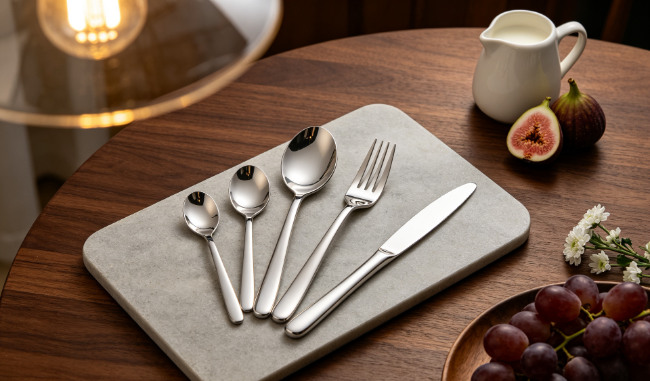
A mirror finish is highly reflective and creates a bright, polished appearance.
It is commonly associated with:
Premium tableware
Formal dining
Hotel restaurants
Upscale hospitality
Decorative flatware collections
The surface should have a consistent appearance without obvious scratches, dull areas or uneven polishing.
Mirror finish products often require careful surface preparation because visible marks can be more noticeable on a highly reflective surface.
Satin Finish Stainless Steel Spoon
A satin finish creates a softer appearance than a mirror finish.
The surface has a controlled texture and reduced reflection.
Satin finishes can work well for:
Contemporary tableware
Casual dining
Modern restaurants
Retail collections
Everyday household products
For large orders, consistency of the satin texture is important.
Brushed Stainless Steel Spoon
A brushed finish creates visible directional lines on the stainless steel surface.
This finish can give the product a modern and industrial appearance.
Important characteristics include:
Brushing direction
Texture consistency
Line uniformity
Surface coverage
The brushing pattern should be consistent across the complete product collection.
Matte Stainless Steel Spoon
A matte finish has a low-reflective appearance.
It can create a clean and understated visual style.
Matte finishes may be suitable for:
Modern tableware
Minimalist collections
Contemporary restaurants
Lifestyle retail products
Because matte products have a different visual character from polished spoons, buyers should compare physical samples before selecting the finish.
Polished Stainless Steel Spoon
Polished finishes create a smooth and bright appearance.
Depending on the polishing level, a polished spoon may range from a relatively soft shine to a highly reflective surface.
The final specification should clarify the expected appearance.
Gold Stainless Steel Spoon Finish
Gold-colored stainless steel spoons are often used for decorative or premium tableware collections.
A gold finish can create a strong visual identity for:
Hospitality projects
Event tableware
Restaurants
Retail collections
Private label products
Color consistency is important when producing large quantities.
Black Stainless Steel Spoon Finish
Black finishes can provide a modern and distinctive appearance.
They may be used for:
Contemporary restaurants
Modern retail collections
Private label tableware
Lifestyle products
Surface protection and appearance consistency should be considered during product development.
PVD Stainless Steel Spoon Finish
PVD is commonly used for decorative stainless steel products requiring a colored surface finish.
Depending on the process and product requirements, PVD can be used to create different visual effects and colors.
Potential benefits include:
Decorative appearance
Consistent color
Premium visual positioning
Design flexibility
The final finish should be evaluated using an approved physical sample.
Decorative Stainless Steel Spoon Finishes
Some projects require a finish that goes beyond conventional polished or satin surfaces.
Decorative options may be developed to create:
A specific color
A unique texture
A special visual effect
A coordinated collection
For these projects, the buyer should provide a clear reference whenever an exact appearance is required.
How Finish Changes Product Appearance
The same spoon design can appear very different with different finishes.
A mirror finish emphasizes brightness and reflection.
A satin finish creates a softer appearance.
A brushed finish highlights directional texture.
A matte finish produces a more understated look.
A colored finish can become a major part of the product identity.
This makes finish selection an important part of product development rather than simply a final manufacturing detail.
Choosing a Finish for Restaurants
Restaurants should consider the overall table setting.
Factors may include:
Table style
Interior design
Menu positioning
Cleaning requirements
Replacement needs
Existing flatware
A finish should complement the restaurant's overall dining environment.
Choosing a Finish for Hotels
Hotels may use different flatware finishes for different dining concepts.
For example, a hotel could select:
Traditional polished pieces for formal dining
Satin pieces for casual restaurants
Decorative finishes for special events
The finish should match the intended service environment.
Choosing a Finish for Retail
Retail buyers often need to consider visual presentation.
The product should look attractive both in packaging and when displayed in a store or online listing.
Finish selection can influence:
Product photography
Shelf appearance
Brand positioning
Customer perception
For this reason, a physical sample is useful before finalizing the retail product.
Choosing a Finish for Private Label Brands
Private label brands can use surface finish as part of their visual identity.
A brand may select:
Classic polished
Modern satin
Brushed
Matte
Gold
Black
The finish can then be coordinated with packaging and other products in the collection.
Matching Spoon Finishes With Other Flatware
A stainless steel spoon is rarely purchased completely independently.
It often belongs to a collection that includes:
Forks
Knives
Teaspoons
Dessert pieces
Serving pieces
The finish should remain visually consistent across the collection.
Mixing different surface treatments without a clear design purpose can create an inconsistent appearance.
Finish and Product Maintenance
Different finishes can show marks and surface changes differently.
Highly reflective surfaces may make scratches more visible.
Textured finishes may create a softer visual effect.
Colored decorative finishes may require specific care considerations depending on the application.
B2B buyers should consider the intended cleaning and service environment when selecting a finish.
Finish Selection for High-Volume Food Service
For high-volume commercial applications, the finish should be evaluated together with practical usage requirements.
Important considerations include:
Appearance
Product consistency
Cleaning process
Replacement requirements
Purchasing budget
The most decorative finish is not necessarily the best choice for every commercial environment.
Finish Selection for Premium Tableware
Premium collections may place greater emphasis on surface appearance.
Mirror and decorative finishes can help create a more distinctive visual presentation.
However, premium positioning should also consider:
Material
Weight
Handle design
Proportions
Packaging
The finish is only one part of the overall product specification.
How to Specify a Stainless Steel Spoon Finish
A product specification should describe the finish clearly.
Useful information can include:
Finish name
Surface appearance
Texture
Color if applicable
Reference sample
Acceptable variation
Simply writing "polished" may not be sufficient for a custom project.
Why a Physical Finish Sample Matters
Written descriptions cannot always communicate surface appearance accurately.
A physical sample allows the buyer to evaluate:
Reflection
Texture
Color
Surface consistency
Overall appearance
Once approved, the sample can become a production reference.
Common Finish Problems
Potential surface problems include:
Uneven polishing
Visible scratches
Inconsistent brushing
Color variation
Dull areas
Uneven texture
Surface spots
These issues should be considered during production inspection.
Finish Consistency Between Production Batches
For repeat orders, maintaining the same finish is important.
The manufacturer should have a clear reference for:
Surface treatment
Color
Texture
Brightness
Approved sample
This can help reduce visible differences between separate production batches.
Working With an Experienced Stainless Steel Spoon Manufacturer
Homefelt has more than 30 years of stainless steel manufacturing experience and produces stainless steel cutlery together with kitchen and dining products, BBQ tools, pet bowls and children's tableware.
For international B2B customers, Homefelt supports stainless steel spoon projects with different surface finishes, designs, branding and packaging requirements.
Importers, distributors, restaurant suppliers, hospitality businesses, retailers and private label brands can discuss the intended finish together with material, dimensions, product design and target quantity.
For decorative or customized finishes, an approved physical sample can provide a clear reference for production.
A Practical Finish Selection Process
B2B buyers can follow these steps:
Define the target market
Identify the intended application
Select the spoon design
Compare available finishes
Review physical samples
Select the preferred appearance
Confirm material and dimensions
Define acceptable finish variation
Approve the final sample
Apply the specification to bulk production
This approach can help ensure that the finished product matches the intended market positioning.
Conclusion
The surface finish of a stainless steel spoon can strongly influence its appearance, product positioning and relationship with a complete tableware collection.
Mirror, satin, brushed, matte and decorative finishes each provide different visual characteristics. The right choice depends on the intended application, target market, brand style and purchasing requirements.
Homefelt has more than 30 years of stainless steel manufacturing experience and works with international B2B customers on standard and customized stainless steel products.
By comparing physical samples, defining finish requirements clearly and maintaining an approved reference throughout production, importers, distributors, restaurants, hotels, retailers and private label brands can select stainless steel spoon finishes that better match their product concepts.