

13 May
Stainless Steel Spoon Surface Finish: Comparing Mirror Polish and Satin Styles
Stainless Steel Spoon Surface Finish: Co...
Stainless Steel Spoon Surface Finish: Comparing Mirror Polish and Satin Styles
The surface finish of a stainless steel spoon influences its appearance, how it fits into a cutlery collection and the impression it creates for buyers. Two spoons with similar dimensions and material specifications can look noticeably different when one has a reflective mirror polish and the other has a softer satin appearance.
For importers, distributors and private label brands, choosing a finish is not simply a visual decision. Surface texture, polishing consistency, visible marks, maintenance expectations and production repeatability can all affect whether the finished product meets the project brief.
Homefelt factory supports B2B stainless steel cutlery development, including OEM, ODM, wholesale and bulk production. Understanding the available finish options helps buyers communicate their expectations clearly and select a surface treatment suited to their target market.
1. What Does Surface Finish Mean for a Stainless Steel Spoon?
Surface finish describes the appearance and texture of the spoon's exposed metal surfaces after processing. It can range from highly reflective polishing to a softer, less reflective appearance.
The final result depends on the starting material, forming quality, polishing or finishing process and the shape of the spoon. A finish that looks attractive on a flat handle may appear different across a curved bowl because light reflects differently from each surface.
When discussing a stainless steel spoon surface finish with a manufacturer, buyers should identify the intended appearance rather than relying on general descriptions alone.
Useful reference information includes:
A photograph or physical sample showing the preferred finish
Whether the surface should be highly reflective or softly reflective
Whether the handle and bowl should have the same appearance
Any visible texture or directional brushing requirements
Expectations for scratches, polishing marks and surface consistency
These details help establish a common reference before sample development begins.
2. Mirror Polish: A Bright and Reflective Appearance
Mirror-polished stainless steel spoons have a smooth, highly reflective appearance. This finish can create a clean, bright presentation and may suit premium-looking retail collections, gift-oriented cutlery ranges and brands seeking a classic polished style.
The reflective surface can emphasize the shape of the bowl and handle, making consistency particularly important. Uneven polishing or visible scratches may be more noticeable under bright lighting.
When evaluating a mirror polished spoon, buyers should examine the product from several angles. Check whether the reflection appears reasonably uniform and whether the bowl and handle have a consistent finish.
Important considerations include:
Overall brightness and reflectivity
Visible polishing lines or surface marks
Consistency between individual pieces
Appearance around curved areas and edges
Compatibility with the other items in the collection
A mirror finish should not automatically be treated as proof of higher material quality. It is primarily a surface appearance characteristic; the steel grade, dimensions and other performance requirements should be evaluated separately.
For a wholesale project, define the expected appearance through an approved sample so the manufacturer has a clear reference for production.
3. Satin Finish: A Softer, Less Reflective Look
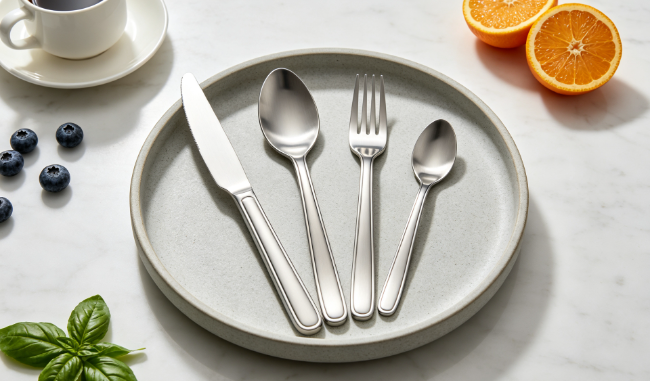
A satin finish offers a more subdued appearance than a mirror polish. Depending on the finishing process, it may feature a fine, relatively uniform texture that reduces strong reflections.
This style can suit contemporary retail collections, minimalist designs and brands looking for a distinctive alternative to fully polished flatware.
However, satin finishes are not all identical. The direction, fineness and uniformity of the texture can change the visual result. A brushed finish may show directional lines, while another satin-style surface may appear more uniform or softly textured.
When reviewing a brushed stainless steel spoon, buyers should consider:
Texture direction and consistency
Whether the bowl and handle have matching appearances
Visible scratches or irregular marks
How the finish looks under different lighting
Whether the style matches the rest of the product range
The term “satin” should be supported by a visual reference because different suppliers may interpret finish descriptions differently. An approved sample or clearly documented finish requirement reduces ambiguity.
4. Can the Bowl and Handle Have Different Finishes?
Some custom cutlery designs combine contrasting surface treatments. For example, a spoon may have a polished bowl and a brushed handle, creating a visual distinction between the two sections.
Such designs can help a private label collection stand out, but they require more detailed communication during product development. The transition between finishes should look intentional, and the design should be feasible for the chosen spoon construction.
Before approving a mixed-finish design, confirm:
Which areas receive each finish
Where the transition line should appear
Whether the transition must follow a defined position
How the finish should align across matching cutlery pieces
Whether the proposed process affects cost or production lead time
A photograph can show the general concept, but a physical sample is more useful for judging the actual contrast between surfaces. The buyer should approve the finish combination on the intended product rather than assuming the result will match a digital rendering exactly.
Homefelt can discuss finish combinations for customized stainless steel spoon and flatware projects according to the design and production requirements.
5. How Finish Influences Product Evaluation and Care Expectations
Different surface finishes may make certain types of marks more visible than others. On a reflective surface, fine scratches can stand out under particular lighting. On a brushed surface, marks may interact with the direction of the texture.
This does not mean one finish is universally more durable than another. Actual performance depends on the material, finishing process, use conditions and care practices.
Buyers should evaluate the finished product according to its intended application. For products expected to undergo frequent washing or commercial use, clarify the applicable care instructions and confirm that the finish is appropriate for those conditions.
During sample review, inspect the surface under consistent lighting. Look for visible scratches, uneven texture, inconsistent polishing and differences between the bowl and handle. If a particular appearance is critical to the brand, define the acceptable level of variation before production.
Care instructions should be based on the actual product and any relevant manufacturer guidance rather than generalized claims about all polished or satin stainless steel products.
6. Specifying Finish Quality for Bulk Orders
For a bulk order, terms such as “high polish,” “premium finish” or “brushed surface” may be too vague on their own. Buyers should describe the expected appearance in a way that can be checked during inspection.
A practical finish specification can include:
Finish type and reference sample
Areas of the spoon covered by the finish
Texture direction, where relevant
Acceptable visible surface defects
Consistency requirements across the order
Inspection lighting or viewing conditions, if necessary
It is also useful to define whether the finish should match across all pieces in a set. A spoon and fork with different reflectivity or texture may look inconsistent even if each item is acceptable when viewed separately.
For repeat orders, retain the approved sample and finish specification. If a finishing process or material changes, review the impact on appearance before the revised product is approved.
The inspection criteria should be practical and agreed upon by both parties. Clear visual standards help reduce subjective disagreements during quality review.
7. Finish Selection and Its Effect on Project Cost
Surface finish can affect the production process and overall quotation. The cost depends on the spoon design, starting surface condition, finishing requirements, order quantity and any additional inspection expectations.
A highly reflective finish may require different polishing work from a directional brushed surface. A design combining multiple finishes may require additional process steps or tighter control of the transition between areas.
Buyers should therefore compare the total specification rather than assuming that a particular finish always carries the same cost.
When requesting quotations, specify the product model, material, finish reference, expected quantity and packaging requirements. If you are considering more than one finish, ask the factory to quote each option separately where practical.
This makes it easier to evaluate the commercial difference and decide whether the visual benefits align with the product's intended price position.
8. Developing a Consistent Finish Across a Flatware Collection
A coordinated collection requires more than selecting an attractive finish for one spoon. Buyers should consider how the same surface style will look across forks, knives and other spoon sizes.
Handle shapes, curves and surface areas differ between products, so the visual result may not be identical even when the same finishing method is used. For example, directional brushing can appear more prominent on a broad, flat handle than on a narrow curved section.
During collection development, review samples together under similar lighting. Confirm the intended finish, the relationship between different pieces and any acceptable visual differences caused by their shapes.
For private label programs, record the finish requirement against each product code. This is especially helpful when the collection includes both standard items and customized designs.
Homefelt factory can discuss product finish, design specifications, packaging coordination and bulk production planning with B2B buyers. A clear collection brief helps connect the desired appearance with the practical requirements of manufacturing.
9. What to Include in a Finish-Focused Inquiry
If surface appearance is important to your project, include a finish reference in your first inquiry. This gives the manufacturer a clearer understanding of the intended result.
Where possible, provide:
A product photograph or physical reference sample
Preferred mirror, satin or brushed appearance
Material grade and spoon dimensions
Whether different areas need contrasting finishes
Expected quantity and product assortment
Private label, packaging and delivery requirements
Any specific visual inspection criteria
If you are undecided between two finishes, explain the target market and desired product appearance. The factory can discuss the available options and help identify what needs to be evaluated during sampling.
Homefelt welcomes inquiries from importers, wholesalers, distributors and private label brands seeking a stainless steel spoon manufacturer for customized and bulk orders. By confirming the surface finish alongside the other product specifications, buyers can establish a clearer reference for sample approval and mass production.
You May Be Interested In
Stainless Steel Spoon Dimensions: A Practical Specification Guide
Stainless Steel Spoon Logo Engraving: Branding Options for B2B Buyers
OEM and ODM Stainless Steel Cutlery Development