

25 May
Stainless Steel Spoon for Restaurant Table Settings: A B2B Hospitality Guide
Stainless Steel Spoon for Restaurant Tab...
Stainless Steel Spoon for Restaurant Table Settings: A B2B Hospitality Guide
A stainless steel spoon is a practical part of a restaurant table setting, but its design can also influence the overall appearance of the dining table.
For restaurants, hotels, catering companies and hospitality distributors, selecting the right spoon involves more than choosing a basic utensil. The spoon should work with the restaurant's dining concept, other tableware, service style and purchasing requirements.
A coordinated stainless steel spoon collection can provide both practical functionality and a consistent visual identity across different dining environments.
The Role of a Spoon in Restaurant Table Settings
Although spoons are relatively small compared with plates, glassware and serving pieces, they contribute to the overall table presentation.
A restaurant may use spoons for:
Soups
Desserts
Breakfast service
Coffee and tea
General dining
Banquets
Catering events
The appropriate product depends on the restaurant's menu and service format.
Matching the Spoon With the Dining Concept
The tableware should support the restaurant's overall atmosphere.
A modern restaurant may prefer clean and simple lines, while a traditional dining environment may use more decorative shapes.
For B2B buyers, the spoon should therefore be evaluated together with the restaurant's:
Interior design
Tableware
Menu
Service style
Customer positioning
A consistent selection can make the table setting feel more intentional.
Modern Restaurant Table Settings
Modern restaurants often favor simple silhouettes and restrained details.
A stainless steel spoon with a clean handle profile can work well with contemporary plates and glassware.
Important design considerations may include:
Handle proportions
Bowl shape
Surface finish
Product weight
Visual simplicity
The goal is usually to create a balanced appearance rather than make one utensil dominate the table.
Fine Dining Table Settings
Fine dining environments may place greater emphasis on proportions, finish and hand feel.
The spoon can be selected to complement premium plates, glassware and other flatware.
For these projects, buyers may pay closer attention to:
Surface consistency
Handle design
Weight
Balance
Edge finishing
Overall presentation
A physical sample is useful for evaluating how the product feels and looks alongside the restaurant's existing tableware.
Casual Dining
Casual dining operations often need a combination of attractive appearance and practical everyday performance.
The product should fit the restaurant's visual identity while remaining suitable for frequent handling and washing.
Purchasing teams may prioritize:
Consistent supply
Practical design
Suitable weight
Easy maintenance
Competitive purchasing cost
Breakfast Service
Hotels and restaurants may use stainless steel spoons extensively during breakfast service.
The same dining area can require spoons for cereal, yogurt, fruit, desserts, coffee and other foods.
For high-volume breakfast operations, buyers should consider the expected usage level and the number of pieces required for continuous service.
Dessert Service
Dessert presentation can require smaller or more refined spoon designs.
The selected spoon should match the portion size and presentation style while coordinating with the restaurant's other tableware.
For a complete collection, dessert spoons can share the same design language as the main dining flatware.
Coffee and Tea Service
Smaller spoons are frequently used alongside coffee and tea.
Restaurants and hotels can create a more consistent table setting by coordinating smaller utensils with the main stainless steel spoon collection.
Matching characteristics may include:
Handle shape
Finish
Material
Brand style
Banquet Service
Banquet operations require tableware that can support large numbers of guests.
A banquet buyer may need to consider:
Quantity
Storage
Replacement
Handling
Cleaning
Replenishment
Consistent product specifications are particularly useful when the same tableware is used across multiple events.
Catering Applications
Catering companies may transport tableware between venues.
This can create additional handling requirements compared with a fixed restaurant location.
The purchasing specification should therefore consider the complete use cycle, including delivery, setup, service, collection, cleaning and storage.
Coordinating the Spoon With Forks and Knives
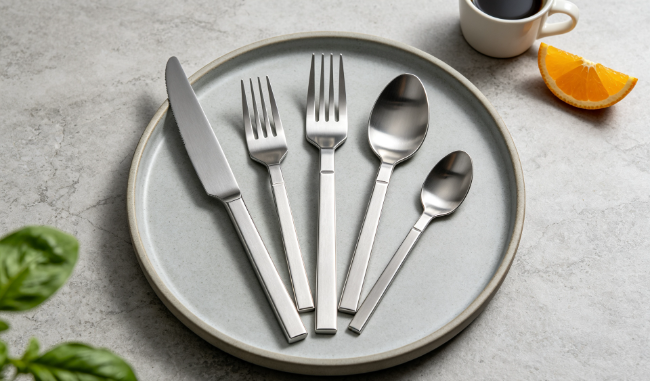
A stainless steel spoon usually forms part of a larger flatware collection.
The spoon should coordinate with the corresponding fork and knife in terms of:
Handle design
Material
Finish
Proportions
Overall visual style
Buying coordinated pieces from the same product family can simplify collection development.
Creating a Complete Dining Collection
Restaurants may need more than basic table knives, forks and spoons.
A broader collection can include:
Teaspoons
Dessert spoons
Serving spoons
Serving forks
Specialty utensils
A manufacturer with multiple stainless steel product capabilities can help buyers develop related products around a consistent design concept.
Surface Finish and Restaurant Style
The surface finish can influence the appearance of a table setting.
A polished finish creates a bright presentation, while satin or brushed finishes provide a softer visual effect.
The finish should be selected according to:
Restaurant style
Existing tableware
Lighting
Cleaning requirements
Product positioning
A physical sample provides a more reliable reference than photographs alone.
The Importance of Handle Design
The handle is one of the most visible parts of a spoon.
Different handle profiles can create very different impressions.
A buyer may evaluate:
Straightness
Width
Thickness
End shape
Decorative details
Hand feel
For restaurant projects, the handle should combine visual consistency with comfortable everyday use.
Bowl Shape and Proportion
The spoon bowl also contributes to its overall appearance and function.
Buyers can consider:
Bowl length
Bowl width
Depth
Edge profile
Relationship between bowl and handle
The correct proportions depend on the intended application.
Product Weight and Hand Feel
Weight affects how the spoon feels in the hand.
A lighter specification may suit certain high-volume applications, while a heavier spoon can create a more substantial dining experience.
For hospitality projects, buyers should define the desired hand feel before finalizing the product.
Restaurant Branding
Some restaurants want their tableware to reflect their own brand identity.
A stainless steel spoon can be customized with branding where the product design allows it.
Branding may be incorporated through:
Logo placement
Handle design
Custom surface treatment
Coordinated packaging
For commercial projects, the branding method should be approved through a physical sample before bulk production.
Consistency Across Multiple Locations
Restaurant groups operating several locations need consistent tableware.
A standardized product specification can help ensure that each location receives the same:
Material
Design
Finish
Weight
Packaging
Keeping an approved sample and detailed product reference can simplify future replenishment.
Replacement and Replenishment
Restaurant tableware is subject to daily handling and occasional loss or damage.
A long-term purchasing plan should consider replacement availability.
The buyer should retain the original:
Product reference
Material specification
Finish
Dimensions
Weight
Packaging information
This information makes it easier to request matching products later.
Purchasing for Restaurant Groups
Restaurant groups may have different requirements from independent restaurants.
Large groups often need:
Stable supply
Consistent specifications
Repeat production
Coordinated collections
Predictable packaging
A manufacturer capable of supporting both initial development and repeat production can be valuable for these purchasing programs.
Purchasing for Hospitality Distributors
Distributors may serve restaurants with different concepts and price positions.
They can benefit from having access to multiple spoon designs and finishes.
A broader product portfolio allows distributors to offer:
Standard collections
Premium collections
Custom products
Private label ranges
This can help serve different customer segments without changing the overall supply relationship.
Choosing Quantities for Restaurant Projects
The required quantity should reflect the restaurant's operating model.
Factors can include:
Number of seats
Number of daily services
Cleaning cycle
Storage capacity
Replacement requirements
Number of locations
The purchasing team should consider both daily usage and reserve inventory.
Storage Considerations
Stainless steel spoons should be stored in a clean and organized environment.
Proper storage can reduce unnecessary scratches, contamination and handling damage.
For large hospitality operations, storage systems should also allow staff to count and replenish products efficiently.
Packaging for Hospitality Orders
Hospitality buyers may prefer packaging optimized for bulk handling rather than retail presentation.
Packaging can be designed around:
Quantity per inner pack
Quantity per carton
Product protection
Easy handling
Storage efficiency
The packaging specification should be finalized before bulk production.
Custom Restaurant Collections
Restaurants developing a distinctive identity may require a custom collection.
A custom project can begin with an existing product and modify selected elements, or it can involve a new design.
Possible customization areas include:
Handle profile
Product dimensions
Weight
Finish
Logo
Packaging
Sample approval should be completed before commercial production.
Working With an Experienced Stainless Steel Manufacturer
Homefelt has more than 30 years of stainless steel manufacturing experience and produces stainless steel cutlery together with kitchen and dining products, BBQ tools, pet bowls and children's tableware.
For international B2B customers, Homefelt supports restaurant, hotel, catering and hospitality projects involving standard and customized stainless steel spoons.
Buyers can provide their restaurant concept, product references, target quantity, desired finish and other requirements for project evaluation.
The manufacturer can then support the process from product selection and sample development through production, quality control and packaging.
A Practical Restaurant Spoon Selection Process
B2B hospitality buyers can follow these steps:
Define the restaurant concept
Identify the intended spoon applications
Review suitable product designs
Compare materials
Select the surface finish
Evaluate handle and bowl proportions
Request physical samples
Compare the spoon with existing tableware
Confirm quantity requirements
Define quality expectations
Confirm packaging
Approve the final specification
Place the production order
Retain the approved product reference
Plan future replenishment
This approach helps connect aesthetic requirements with practical purchasing considerations.
Common Restaurant Purchasing Mistakes
Choosing the Spoon Separately
A spoon should coordinate with the rest of the flatware and tableware rather than being evaluated in isolation.
Focusing Only on Appearance
Visual design is important, but weight, balance, finish and manufacturing consistency also affect the user experience.
Ignoring Replacement Needs
Restaurant tableware is used frequently, so future replenishment should be considered when selecting the supplier.
Changing Specifications Between Orders
Unplanned changes in material, finish or dimensions can create visible differences between batches.
Ordering Without Sample Approval
A physical sample provides a much better reference for evaluating the final product.
Conclusion
A stainless steel spoon is a small but important part of a restaurant table setting.
For hospitality buyers, the right product should match the restaurant's dining concept while providing the required functionality, consistency and long-term supply support.
Handle design, bowl proportions, material, finish, weight and coordination with other flatware can all influence the final table presentation.
Homefelt has more than 30 years of stainless steel manufacturing experience and works with international B2B customers on standard and customized stainless steel products.
For restaurants, hotels, catering companies and hospitality distributors, establishing a clear product specification and maintaining an approved reference can make future purchasing and replenishment more efficient.