

31 May
Stainless Steel Cutlery Product Replacement for OEM and Private Label Supply
Stainless Steel Cutlery Product Replacem...
Stainless Steel Cutlery Product Replacement for OEM and Private Label Supply
Stainless steel cutlery products can remain in a market for many years, but not every product stays unchanged forever. A retailer may decide to refresh an old collection, a distributor may need an alternative product, or a manufacturer may stop producing a particular item.
For B2B buyers, replacing an existing knife, fork or spoon is not simply a matter of finding another product that looks similar. The replacement should fit the commercial purpose of the original item while considering dimensions, appearance, material, packaging, pricing and future supply.
For OEM and private label brands, the transition also needs to protect the consistency of the overall product range.
Homefelt factory specializes in stainless steel knives, forks, spoons and flatware sets for OEM, ODM, private label, wholesale and bulk manufacturing. With long-term experience in stainless steel cutlery, Homefelt can support customers when an existing product needs to be updated, replaced or developed into a new commercial version.
Why Cutlery Products May Need Replacement
There are many reasons why a buyer may need to replace an existing stainless steel cutlery product.
A product may no longer match the brand's current collection. A distributor may want to introduce a more competitive alternative. A retailer may refresh its product range. An existing supplier may discontinue a particular design.
In other cases, the buyer may simply want to improve the product while keeping the overall commercial positioning similar.
The replacement decision can therefore involve both product and business considerations.
For B2B buyers, the key question is not only “What can replace this product?” but also “What should remain unchanged, and what can be improved?”
Comparing the Existing Product
Before developing a replacement, the buyer can establish the important characteristics of the current product.
Useful information may include:
Product type
Overall dimensions
Material specification
Product weight where applicable
Surface finish
Handle appearance
Functional requirements
Packaging format
Current sales market
Target price range
Typical order quantity
A physical reference sample can also help the factory understand the existing product.
The purpose of this comparison is to separate essential requirements from features that can be changed.
For example, a buyer may want to retain the general appearance of a successful spoon while adjusting another aspect of the product for a new market.
Keeping the Replacement Commercially Relevant
A replacement product should make sense for the market in which it will be sold.
A distributor may require a product with a similar positioning to its existing item so that its customers can adopt the replacement easily.
A private label brand may instead want the new product to look sufficiently different to represent a collection renewal.
The right approach depends on the commercial objective.
Homefelt can discuss these requirements with the buyer before moving into detailed product development.
Replacement Does Not Always Mean Identical
There is an important difference between an identical replacement and a replacement product.
If the original item is no longer available, the buyer may need the closest practical alternative. In this situation, maintaining every characteristic may not be possible.
The factory can instead evaluate which features are most important to the customer.
These may include:
Overall product appearance
Product dimensions
Material
Surface treatment
Weight
Packaging
Price positioning
Compatibility with an existing collection
This allows the buyer to make a deliberate decision about what should remain consistent.
For OEM and ODM projects, this can create an opportunity to improve the product rather than simply reproduce an old design.
A Practical Replacement Project
Consider a distributor that has sold a stainless steel spoon for several years.
The original product is no longer suitable for the distributor's new product range, but customers are already familiar with its general style.
The distributor provides the existing spoon as a reference and explains which characteristics should remain similar.
Homefelt reviews the product requirements and discusses the possible manufacturing direction with the customer.
The new spoon can then be developed around the buyer's commercial objectives while maintaining a connection with the established product.
This approach helps reduce the gap between the old product and the replacement.
Replacing One Product Within a Collection
Sometimes only one item needs to be replaced.
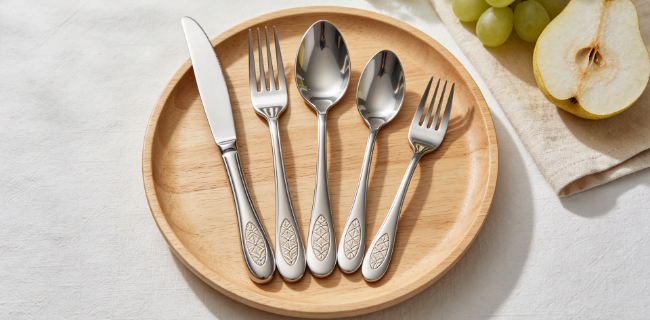
A stainless steel flatware collection may contain several matching knives, forks and spoons, while one product becomes unavailable or no longer fits the buyer's requirements.
In this situation, the replacement should be considered in relation to the rest of the collection.
For example, if a dinner spoon is being replaced, the buyer may want the new item to maintain a coordinated appearance with the existing dinner fork and table knife.
This requires the factory to look at the collection rather than evaluating the replacement item independently.
For private label brands, collection coordination can be particularly important because the products are presented together in catalogs, stores or online channels.
Replacement and Future Supply
When selecting a replacement product, buyers should also consider future availability.
A replacement is not useful if it creates another sourcing problem shortly after introduction.
For this reason, buyers can discuss the intended product lifecycle and expected purchasing volume with the factory.
If the product is expected to become a long-term commercial item, the manufacturing relationship should be established with future repeat orders in mind.
This is one reason experienced stainless steel cutlery manufacturing can be valuable to distributors and brands.
The goal is not only to create one replacement product but to establish a practical supply solution for future demand.
What Buyers Should Provide
When requesting a replacement product from a factory, buyers can provide as much information about the existing item as possible.
Useful materials include:
Existing product samples
Product photos
Drawings
Current specifications
Product codes
Estimated annual quantity
Target market
Current packaging
Target price
Required changes
Even when a complete specification is unavailable, a physical sample or detailed photographs can give the factory a useful starting point.
Homefelt Factory for Stainless Steel Cutlery Replacement
Homefelt factory focuses on stainless steel knife, fork and spoon manufacturing for international B2B customers.
The factory supports OEM, ODM, private label, wholesale and large-volume production. Customers can work with Homefelt on new product development as well as replacement or updated versions of existing stainless steel cutlery.
Homefelt has 40 years of experience in the stainless steel cutlery business and has worked with well-known brands. The factory has passed BSCI, SEDEX 4P, BRC and ISO9001 requirements, together with Disney audit requirements, and has FAMA and FSC certifications.
These qualifications form part of the supplier background that buyers can evaluate when selecting a long-term manufacturing partner.
More importantly, practical experience with stainless steel knives, forks and spoons allows the factory to discuss product requirements from both the design and manufacturing perspectives.
One-Stop Replacement Support
A replacement project can involve more than the cutlery itself.
Once a new product is confirmed, the buyer may also need updated packaging, product information and transportation arrangements.
Homefelt provides one-stop support covering product design, manufacturing, packaging and transportation according to the customer's requirements.
This allows an importer, distributor or private label brand to manage the transition through one manufacturing partner.
For customers replacing an established product, this can make the process easier to coordinate from the original reference through to the new commercial product.
Planning a Smooth Product Transition
The earlier a buyer starts planning a replacement, the more options are available.
If an existing product is approaching the end of its commercial life, the buyer can begin discussing alternatives before current inventory is completely exhausted.
This gives the factory more time to understand the original product, review the replacement requirements and prepare the new manufacturing solution.
For private label and wholesale businesses, this can help reduce unnecessary disruption to the product range.
The replacement can then be introduced as part of a planned product transition rather than an emergency sourcing decision.
You May Be Interested In
If you need to replace, update or develop a stainless steel knife, fork, spoon or flatware set for OEM, ODM, private label or wholesale supply, Homefelt factory can review your existing product and requirements.
Send your reference photos, samples, specifications, estimated quantities and target market to ingrid@homefelt.net to discuss a suitable replacement solution.
Homefelt combines stainless steel cutlery manufacturing experience with product design, packaging and transportation support, helping B2B customers build practical long-term supply programs and grow together with a reliable China manufacturing partner.