


18 May
Stainless Steel Cutlery for Military Dining and Defense Foodservice
Stainless Steel Cutlery for Military Din...
Stainless Steel Cutlery for Military Dining and Defense Foodservice
Military dining facilities can serve large populations across bases, training centers, academies, barracks and other defense-operated locations. Foodservice may support daily meals for personnel, organized training schedules, temporary population increases and large-scale institutional dining operations.
The dining environment is often structured around defined meal periods, centralized food preparation and carefully managed inventory. Depending on the facility, meals may be served in mess halls, cafeterias, field-adjacent dining facilities or dedicated training centers.
For defense foodservice contractors, institutional procurement teams, military facility suppliers and international B2B distributors, stainless steel cutlery can support reusable tableware programs for high-volume dining.
The purchasing process should consider the number of personnel served, facility type, meal schedule, menu format, inventory circulation, storage capacity, cleaning workflows, replacement planning and long-term supply.
Understand Military Foodservice Operations
Military foodservice can take place in several environments.
A permanent base may operate a large dining hall.
A training center may serve changing groups of personnel.
A military academy can manage structured daily meal programs.
A barracks facility may provide cafeteria-style dining.
Each location can have different requirements for product quantities and service organization.
Mess Hall Dining
Mess halls can serve large groups during concentrated meal periods.
Breakfast, lunch and dinner may each create substantial demand within a limited timeframe.
The cutlery collection should support efficient distribution and fast replenishment.
A standardized core range can help foodservice teams prepare service areas before each meal period.
Military Base Cafeterias
Large military bases may operate multiple dining locations.
Different units or departments may use separate cafeterias according to their work areas and schedules.
Central procurement can establish a common cutlery specification across the base.
Individual facilities can then maintain inventory levels based on their daily service volume.
Training Center Foodservice
Training facilities can experience significant changes in dining population.
New training groups may arrive while other groups complete their programs.
Purchasing teams should consider maximum expected capacity rather than relying only on average attendance.
Reserve inventory can provide flexibility during periods of increased population.
Military Academy Dining
Military academies may combine institutional dining with long-term student accommodation.
Foodservice can operate throughout the academic calendar and support regular meals, special events and formal occasions.
A standardized collection can be used for daily service while additional products can support specific dining requirements.
Meal Schedule Planning
Military facilities may operate according to structured daily schedules.
Foodservice demand can be concentrated around designated meal times.
Inventory planning should consider:
Total personnel served
Number of meal periods
Peak dining participation
Number of dining facilities
Seating capacity
Shift schedules
Training population changes
Cleaning turnaround
Reserve inventory
Replacement demand
These factors can help determine appropriate purchasing quantities.
High-Volume Meal Periods
Large numbers of personnel may arrive at the dining facility during the same period.
The available cutlery should support peak demand rather than average daily consumption.
Foodservice staff can maintain reserve stock close to service areas for efficient replenishment.
Product Range Selection
The required cutlery range should reflect the actual meal program.
A standard institutional dining facility may require basic forks, knives and spoons.
Breakfast service can require teaspoons.
Dessert service may require smaller utensils.
Special events can require additional table settings.
Selecting products based on real menu requirements can help avoid unnecessary inventory.
Build a Standard Core Collection
A central range can support most daily dining operations.
The core collection may include:
Table fork
Table knife
Table spoon
Dessert fork
Dessert spoon
Teaspoon
Additional products can be supplied according to the needs of specific facilities.
Product Dimensions
The dimensions of the cutlery should fit the facility's existing plates, bowls and meal trays.
Samples can be evaluated before bulk purchasing.
The purchasing team can review handle proportions, weight and overall balance within the actual dining environment.
This helps establish a product specification based on practical use.
Surface Finish
The surface finish can influence the appearance of institutional dining areas.
Polished stainless steel can provide a bright and traditional presentation.
Satin finishes can offer a softer appearance.
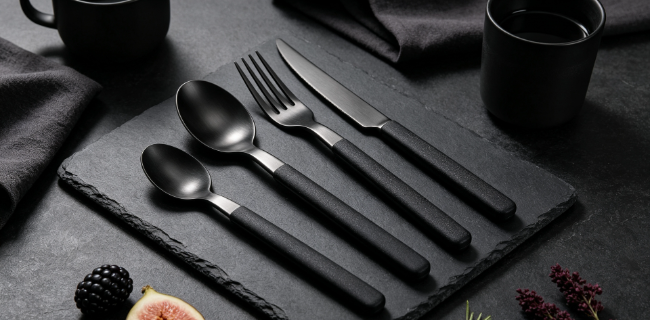
Brushed surfaces can suit contemporary dining environments.
The final selection should coordinate with the complete tableware program.
Centralized Procurement
Large defense organizations may purchase for multiple facilities through centralized procurement systems.
A common cutlery specification can simplify sourcing and future replenishment.
The same approved product references can be supplied to different locations according to their population and service volume.
This can reduce unnecessary variation across the organization.
Inventory Organization
High-volume foodservice requires clear inventory management.
Cutlery can be organized by product type and stored according to expected daily use.
High-demand items can be positioned close to service areas.
Reserve stock can be held in central storage for scheduled replenishment.
Clear identification can help staff maintain an organized workflow.
Cleaning and Reuse
Reusable stainless steel cutlery can be incorporated into institutional dining operations where the facility's established foodservice procedures support reusable products.
The products can move through collection, sorting, cleaning, inspection and redistribution according to the operator's workflow.
Defense foodservice operators should follow their applicable sanitation, safety and operational procedures.
Replacement Planning
Individual utensils may be lost, damaged or removed from active service over time.
Maintaining replacement stock helps preserve a complete collection.
The original product specifications and approved samples should be retained for future procurement.
This is especially useful when the same collection is used across several facilities.
Long-Term Product Availability
Military and institutional dining programs may remain in operation for many years.
If replacement products differ significantly from the original specification, existing inventory can become inconsistent.
Before approving an initial order, buyers should discuss repeat production and future availability with the manufacturer.
Approved samples and detailed product specifications can provide a reference for future orders.
Packaging for Institutional Supply
Military foodservice procurement can involve central warehouses and distribution to multiple facilities.
Packaging should protect products during transportation and support efficient receiving.
Cartons can include product references and quantities.
Packaging quantities can also be coordinated with the buyer's internal distribution requirements.
Custom Institutional Cutlery
Some organizations may require customized products for specific dining programs.
Customization can include handle proportions, surface finishes or selected design details.
The final product should be evaluated through physical samples before mass production.
Approved samples can serve as a reference for future repeat orders.
New Facility Projects
New military dining facilities may require tableware to be planned alongside kitchen equipment and dining furniture.
Purchasing teams can evaluate samples with the selected trays, plates and other service products.
Early specification can help coordinate procurement with the facility's opening schedule.
Facility Renovation Projects
Existing dining halls and cafeterias may undergo renovation or foodservice upgrades.
These projects can create demand for additional or replacement cutlery.
Where product continuity is required, the established specification can be used for replenishment.
Detailed records can simplify future purchasing.
Working With an Experienced Manufacturer
Institutional foodservice projects can require bulk quantities, standardized product references and dependable repeat supply.
Homefelt has more than 30 years of stainless steel manufacturing experience and produces stainless steel cutlery together with kitchen and dining products, BBQ tools, pet bowls and children's tableware.
For international B2B customers, Homefelt supports standard and customized stainless steel products.
Defense foodservice contractors, institutional procurement teams, military facility suppliers and international distributors can discuss product dimensions, material, finish, packaging, branding and estimated quantities according to their requirements.
For long-term programs, approved samples and detailed product specifications can also be retained for future production.
What Institutional Buyers Should Prepare
Before requesting a quotation, buyers can prepare:
Number of facilities
Total dining population
Maximum service capacity
Number of meal periods
Number of dining locations
Seating capacity
Menu requirements
Required cutlery types
Material specification
Surface finish
Packaging requirements
Estimated annual demand
This information can help the manufacturer understand the actual scope of the procurement project.
Establish a Standard Dining Specification
A centralized organization can establish one core cutlery specification for its foodservice facilities.
The specification can include product dimensions, material, finish, packaging and approved samples.
Individual locations can then order according to their own population and service requirements while maintaining the same product standard.
This can simplify centralized procurement and long-term replacement planning.
Prepare for Future Facility Growth
Organizations may open new facilities or expand existing dining operations.
A stable product specification makes it easier to introduce the approved collection into future projects.
Central procurement teams can maintain product documentation and provide the same specifications to new facilities.
This supports consistency as the institutional dining network expands.
Conclusion
Stainless steel cutlery for military dining and defense foodservice should support high-volume institutional meals while fitting the operational requirements of bases, training centers, academies and other defense facilities.
Purchasing teams should evaluate dining population, meal schedules, peak demand, product range, dimensions, surface finish, inventory organization, cleaning workflows, replacement requirements and long-term supply.
For organizations operating multiple foodservice facilities, standardized specifications can simplify procurement while allowing individual locations to adjust quantities according to their service needs.
Homefelt has more than 30 years of stainless steel manufacturing experience and works with international wholesalers, retailers, distributors and institutional foodservice suppliers on standard and customized stainless steel products.
By sharing facility capacity, meal volume, dining requirements and product specifications with the manufacturer, B2B buyers can develop a stainless steel cutlery program that supports organized institutional foodservice and reliable long-term procurement.