


11 May
Stainless Steel Cutlery for Cruise Ships and Marine Hospitality
Stainless Steel Cutlery for Cruise Ships...
Stainless Steel Cutlery for Cruise Ships and Marine Hospitality
Cruise ships combine accommodation, restaurants, entertainment and hospitality services within a highly specialized operating environment. A single vessel can contain several restaurants, buffet areas, cafes, lounges, bars and private dining spaces.
Because dining operations take place onboard, purchasing teams must consider more than appearance and guest comfort. Storage capacity, inventory organization, repeated handling, replenishment and transportation logistics can all influence the choice of cutlery.
For cruise lines, marine hospitality operators, ship suppliers, catering contractors and international B2B distributors, stainless steel cutlery can provide a practical solution for high-volume onboard dining.
The product selection should be based on the vessel's dining concepts, passenger capacity, service model and long-term procurement requirements.
Understand Cruise Dining Operations
A modern cruise vessel may have several distinct foodservice environments.
A main dining restaurant may provide scheduled meals.
A buffet restaurant can serve large numbers of passengers during concentrated periods.
Specialty restaurants may require a more refined table setting.
Poolside cafes can use a simpler collection.
Private dining and event areas may require additional products.
Each application should be considered when creating the overall flatware specification.
Main Dining Restaurants
The main dining room is often one of the most heavily used foodservice areas onboard.
Passengers may dine there for breakfast, lunch and dinner depending on the cruise program.
The cutlery should coordinate with the restaurant's plates, glassware and table linens.
A versatile collection can support different menus while maintaining a consistent appearance.
Buffet Restaurants
Buffet dining creates a different operational pattern.
Passengers move through food stations and may use cutlery throughout the meal.
Utensil stations should be easy for crew members to replenish.
The selected products should be organized efficiently so large quantities can be prepared before peak meal periods.
Specialty Restaurants
Cruise ships often include specialty dining concepts.
A steakhouse, seafood restaurant or international restaurant may use a dedicated table setting.
Different collections can help create distinct restaurant identities.
The cruise operator can still work with one manufacturer across multiple product references to simplify procurement.
Poolside and Casual Dining
Poolside restaurants and casual food outlets may require a simpler table setting.
The products should fit the service environment and available storage space.
A common core collection can be used where appropriate, while specialty utensils can be reserved for specific menu concepts.
Guest Comfort
Passengers may spend extended periods dining onboard.
Cutlery should therefore be evaluated for handle proportions, weight and balance.
A physical sample can provide more useful information than photographs alone.
Purchasing teams can test the products alongside the actual plates and glassware selected for the vessel.
Coordinate With Vessel Tableware
The overall table setting should be considered as one system.
Cutlery dimensions should be proportional to the plates and bowls.
The handle design should complement the restaurant concept.
The surface finish should also coordinate with other metal and tableware elements.
A complete sample setting can help the purchasing team evaluate the visual result before production.
Surface Finish Selection
Different dining areas may call for different finishes.
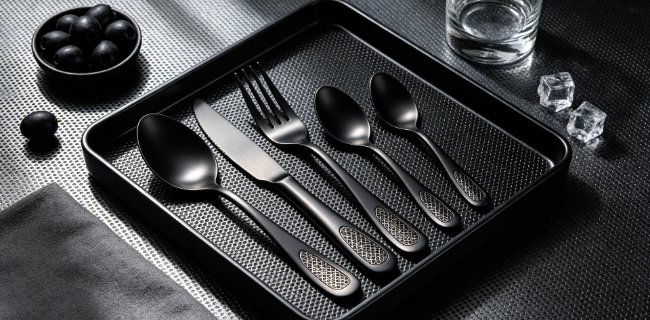
Polished stainless steel can provide a bright and traditional hospitality appearance.
Satin finishes can create a softer contemporary presentation.
Brushed surfaces may suit modern casual dining concepts.
Cruise operators serving several restaurant concepts can select different finishes where necessary.
Build a Vessel-Wide Core Collection
A cruise line can establish a standard collection for common dining applications.
The core range may include:
Table fork
Table knife
Table spoon
Dessert fork
Dessert spoon
Teaspoon
Additional utensils can be added for specialty restaurants and specific menus.
A defined core range simplifies purchasing and onboard inventory management.
Calculate Passenger-Based Inventory
Cruise inventory planning should account for passenger capacity and crew usage.
Important factors include:
Passenger capacity
Crew dining requirements
Number of restaurants
Restaurant seating
Daily meal periods
Buffet capacity
Specialty dining volume
Cleaning turnaround
Reserve inventory
Replacement demand
The largest expected operating scenario should be considered when determining the total quantity.
Plan for Full Occupancy
Cruise ships can operate close to full passenger capacity during busy periods.
Dining demand may increase significantly when occupancy is high.
The onboard inventory should therefore support peak passenger numbers rather than average occupancy alone.
Reserve quantities can provide additional flexibility when demand changes unexpectedly.
Crew Dining Requirements
Crew members may have separate dining facilities.
These areas can use a practical collection designed for frequent everyday use.
Cruise operators should include crew requirements in their total inventory calculations rather than considering passenger restaurants alone.
Storage on Board
Storage space is an important consideration on a vessel.
Large quantities of cutlery need to be organized efficiently within available back-of-house areas.
Products can be separated by restaurant, product type or service period.
Clear identification can help crew members locate and replenish inventory quickly.
Replenishment During Voyages
A cruise ship may operate for several days or weeks before returning to its main supply port.
Inventory planning should therefore account for the entire voyage cycle.
Replacement quantities should be sufficient to cover normal losses and operational demand until the next scheduled replenishment opportunity.
Replacement Planning
Cutlery can gradually leave active service through loss, damage or wear.
Maintaining replacement stock helps preserve the approved collection.
The cruise operator should keep product specifications and approved samples for future purchasing.
This is especially important when the same collection is deployed across multiple vessels.
Standardization Across a Cruise Fleet
Cruise groups may operate several vessels under one brand.
A standardized flatware collection can simplify fleet-wide procurement.
The same product references can be used across multiple ships.
Individual vessels can still add specialty collections according to their restaurant concepts.
This approach can balance centralized purchasing with individual ship requirements.
New Vessel Projects
New cruise ships require substantial quantities of dining products before entering service.
Purchasing teams should define the flatware specification early in the project.
Samples can be reviewed alongside restaurant interiors, plates and glassware.
Once approved, the manufacturer can prepare production according to the vessel's delivery schedule.
Refurbishment Projects
Existing vessels may undergo restaurant renovations or hospitality upgrades.
A renovation can create demand for additional or replacement cutlery.
If the original product remains available, the cruise line can maintain visual consistency.
Detailed product specifications can simplify repeat orders during future refurbishment projects.
Custom Cruise Ship Flatware
Cruise brands may want dining products that reflect their identity.
Custom stainless steel cutlery can be developed with selected handle shapes, surface treatments or branding details.
The design should be evaluated for both guest presentation and onboard operational requirements.
Sample approval should take place before mass production.
Packaging for Marine Logistics
Cruise ship supply chains often involve centralized warehouses and scheduled vessel deliveries.
Packaging should protect the products during transportation and make receiving more efficient.
Cartons can be identified with product references and quantities.
For fleet operators, packaging can also be coordinated with individual vessel requirements.
Long-Term Product Consistency
Cruise lines can operate the same vessels for many years.
A change in product design can make replacement pieces inconsistent with existing inventory.
Before the initial purchase, buyers should discuss repeat production and future availability with the manufacturer.
Approved samples should be retained as a reference for future orders.
Procurement for Ship Suppliers
Marine suppliers may purchase tableware on behalf of cruise operators.
In this case, the supplier needs accurate specifications to ensure that the correct products are delivered.
The purchasing documentation can include material, dimensions, finish, packaging, quantities and approved samples.
Clear product references can reduce errors when several flatware collections are ordered for the same vessel.
Working With an Experienced Manufacturer
Marine hospitality projects can involve large production quantities, strict specifications and repeat orders.
Homefelt has more than 30 years of stainless steel manufacturing experience and produces stainless steel cutlery together with kitchen and dining products, BBQ tools, pet bowls and children's tableware.
For international B2B customers, Homefelt supports standard and customized stainless steel products.
Cruise operators, marine suppliers, hospitality distributors and foodservice contractors can discuss product dimensions, material, finish, packaging, branding and estimated quantities according to their requirements.
For fleet programs, approved samples and detailed product specifications can also be retained for future production.
What Marine Hospitality Buyers Should Prepare
Before requesting a quotation, buyers can prepare:
Number of vessels
Passenger capacity
Crew population
Number of dining venues
Restaurant seating
Daily meal volume
Specialty dining requirements
Required cutlery types
Material specification
Surface finish
Packaging requirements
Estimated annual demand
This information can help the manufacturer understand the project's scale and supply requirements.
Create a Fleet-Wide Specification
Cruise groups can establish a standard flatware specification for their vessels.
The specification can include product dimensions, material, finish, packaging and approved samples.
Individual ships can then purchase according to their dining capacity while maintaining the same core collection.
Specialty restaurants can use additional products when required.
Prepare for Fleet Expansion
Cruise operators may introduce new vessels or expand existing restaurant concepts.
A stable product specification makes it easier to extend the established collection to new ships.
Central purchasing teams can maintain product documentation and provide approved specifications to new vessel projects.
This helps maintain consistency across the fleet.
Conclusion
Stainless steel cutlery for cruise ships and marine hospitality needs to support high-volume dining, multiple restaurant concepts and the logistical demands of onboard operations.
Purchasing teams should evaluate passenger capacity, crew dining, restaurant layouts, peak meal volume, storage limitations, replenishment cycles, surface finish and long-term product availability.
For cruise groups operating multiple vessels, standardized specifications can simplify fleet-wide procurement while allowing individual restaurants to maintain their own dining concepts.
Homefelt has more than 30 years of stainless steel manufacturing experience and works with international wholesalers, retailers, distributors and hospitality suppliers on standard and customized stainless steel products.
By sharing vessel capacity, restaurant requirements, estimated quantities and product specifications with the manufacturer, B2B marine hospitality buyers can develop a stainless steel cutlery program that supports reliable onboard dining and long-term fleet procurement.