


25 May
Stainless Steel Cutlery for Cruise Ship Dining and Hospitality
Stainless Steel Cutlery for Cruise Ship ...
Stainless Steel Cutlery for Cruise Ship Dining and Hospitality
Cruise ships combine accommodation, restaurants, buffet areas and hospitality services within a single operating environment. Dining facilities may serve large numbers of passengers every day, creating continuous demand for reliable tableware.
For cruise operators, marine hospitality suppliers and international distributors, stainless steel cutlery can provide a practical solution for different dining environments onboard.
The selection process needs to consider more than appearance. Product proportions, guest usage, dining concepts, inventory levels, storage, replacement and long term supply can all affect the suitability of a cutlery collection.
A well planned purchasing strategy can help cruise operators maintain a consistent dining experience while making inventory management more efficient.
Understand the Different Dining Areas
A cruise ship may contain several types of food service areas.
These can include buffet restaurants, casual dining venues, specialty restaurants, cafes and premium dining rooms.
Each area may have different requirements.
A buffet restaurant may prioritize efficient handling and replenishment.
A premium restaurant may place greater emphasis on table presentation and product design.
A cruise operator can therefore develop one core collection for general use while selecting additional products for specialized dining areas.
Consider Passenger Volume
Passenger capacity is one of the most important factors when estimating cutlery requirements.
However, the number of passengers alone does not determine the required inventory.
The purchasing team should also consider:
Number of dining venues
Seating capacity
Meal periods
Table turnover
Buffet service
Cleaning turnaround
Reserve inventory
Replacement requirements
A cruise ship with several restaurants may require substantially more cutlery than a single dining venue with the same seating capacity.
Plan for Peak Meal Periods
Breakfast, lunch and dinner can create significant changes in demand.
During peak periods, multiple dining areas may operate at high capacity simultaneously.
The available cutlery needs to support these periods without creating shortages.
Inventory planning should therefore be based on realistic peak usage rather than only average daily consumption.
Reserve stock can provide additional flexibility when passenger numbers or service requirements change.
Select a Versatile Core Collection
A cruise operator may benefit from a stainless steel cutlery collection that works across multiple dining concepts.
A versatile design can be used in buffet restaurants, casual dining areas and selected hospitality spaces.
This simplifies purchasing and can reduce the number of product specifications that need to be stored onboard.
Specialty pieces can then be added where the menu or dining concept requires them.
Consider the Complete Dining Set
The basic collection may include table forks, table knives and table spoons.
Depending on the onboard food program, buyers may also require teaspoons, dessert forks, dessert spoons and serving utensils.
The final product list should be based on the actual menus and service formats.
Ordering unnecessary specialty products can increase inventory complexity without providing significant operational value.
Evaluate Product Balance
Cruise guests may spend considerable time dining onboard.
The cutlery should feel comfortable during normal use.
Handle length, thickness and overall balance can influence the dining experience.
Physical samples should be tested before a large production order.
The purchasing team can evaluate how the products feel in the hand and how they look alongside the plates and other tableware.
Choose the Right Surface Finish
Surface finish contributes to the appearance of a dining collection.
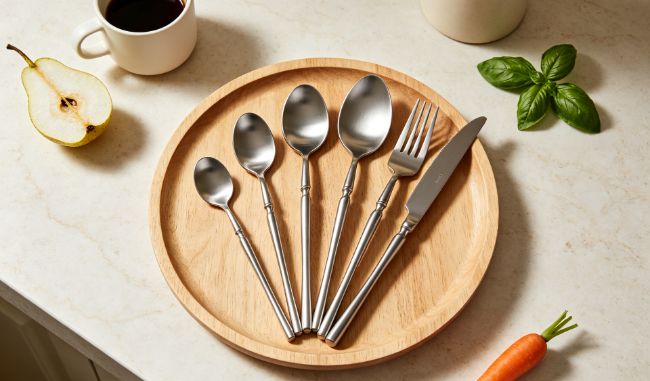
A polished finish can provide a classic and reflective appearance.
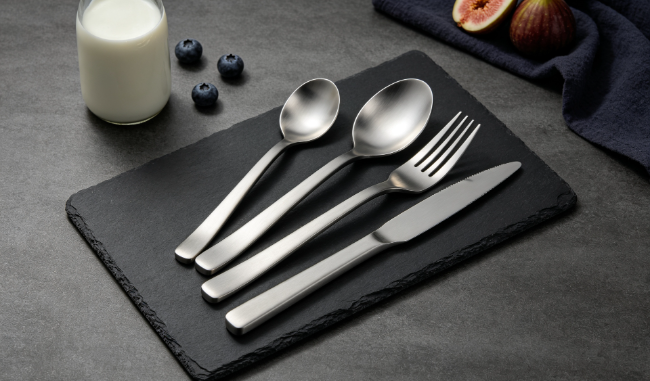
A satin or brushed finish can create a softer and more contemporary look.
For cruise brands with different restaurant concepts, the same core finish may be used throughout the ship while premium venues can introduce a separate collection.
The selected finish should be reviewed under the lighting used in the dining spaces.
Coordinate With Existing Tableware
Cutlery should work visually with plates, glassware, serving dishes and other table accessories.
A product that looks attractive on its own may not create the intended effect when placed on the actual dining table.
Cruise operators can evaluate physical samples with their existing tableware before approving the final product.
This can also help identify whether the product proportions are suitable for the dining environment.
Buffet Service
Buffet restaurants can require particularly high quantities of cutlery.
Guests may collect products from central stations before selecting food.
The cutlery should be easy to recognize and organize.
Clear separation between forks, knives and spoons can make collection more efficient.
Staff should also be able to replenish the stations quickly during busy periods.
A simple product design can support these daily procedures.
Premium Restaurant Service
Specialty and premium restaurants may require a more distinctive cutlery collection.
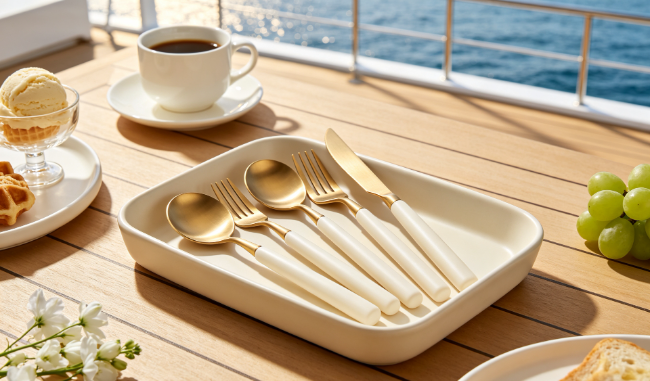
A refined handle shape or selected surface finish can contribute to the overall dining experience.
Some cruise brands may also consider custom products that reflect their brand identity.
For customized projects, physical samples should be evaluated before mass production.
The sample can be compared with the restaurant's plates, glassware and interior design.
Inventory Management Onboard
Storage space on a cruise ship is limited compared with many land based hospitality operations.
This makes efficient inventory management important.
Products should have clear references so that staff can identify them quickly.
Separate storage locations can be assigned to different collections or dining venues.
Product codes can also connect the physical stock with purchasing and replenishment records.
Reserve Stock Planning
Cruise operators need to account for unexpected demand.
Passenger numbers may vary between voyages, while individual products can become unavailable through loss or damage.
Reserve inventory provides additional flexibility.
Frequently used products should generally receive more attention during inventory checks.
The appropriate reserve level depends on passenger capacity, voyage schedule and supplier lead time.
Replacement Requirements
Individual pieces may need to be replaced during the life of a collection.
Replacing only the missing pieces is usually more practical than changing an entire dining set.
This makes long term product consistency important.
Buyers should retain the approved sample and product specification so that future replacement orders can match the existing collection.
Product Consistency Across Voyages
Cruise operators may use the same dining collection for many voyages.
If products are purchased from different suppliers without a clear specification, small differences in handle shape, dimensions or finish may become visible.
A consistent product reference can reduce this problem.
The approved sample should remain available as a physical reference for future production.
Custom Cutlery for Cruise Brands
A cruise company may want its dining environment to reflect its brand.
Custom stainless steel cutlery can incorporate a distinctive handle shape, finish or branding element.
The design should remain practical for repeated hospitality use.
When developing a custom collection, buyers should consider not only the appearance but also product dimensions, production requirements and future replenishment.
Packaging for Marine Hospitality Supply
Cruise ship purchasing usually involves bulk rather than consumer retail packaging.
The packaging needs to protect the products during transportation from the factory to the distribution point and eventually onboard.
Clear carton identification can help warehouse teams organize products before they are delivered to individual dining venues.
Inner pack quantities can also be planned according to the operator's inventory process.
International Shipping Considerations
Cruise operators and marine hospitality distributors may purchase products internationally.
The purchasing team should prepare product specifications, commercial information and packing details before shipment.
Consistent product codes and packaging information can make receiving easier.
Shipping requirements should be discussed with the supplier and logistics provider early in the purchasing process.
Planning for Fleet Expansion
Cruise companies may operate multiple ships.
If the same cutlery collection is used across the fleet, centralized purchasing can simplify replenishment and inventory management.
A standard product specification can be shared across different ships.
Individual vessels can still maintain separate inventory records according to passenger capacity and dining facilities.
This approach can provide both consistency and operational flexibility.
Working With an Experienced Manufacturer
Marine hospitality projects often require reliable production, clear specifications and repeat supply.
Homefelt has more than 30 years of stainless steel manufacturing experience and produces stainless steel cutlery together with kitchen and dining products, BBQ tools, pet bowls and children's tableware.
For international B2B customers, Homefelt supports standard and customized stainless steel products.
Cruise operators, marine hospitality distributors and international purchasing companies can discuss product dimensions, material, finish, branding, packaging and expected quantities according to their requirements.
For long term programs, approved samples and detailed product specifications can also be retained for future orders.
What Cruise Ship Buyers Should Prepare
Before requesting a quotation, buyers can prepare:
Number of ships
Passenger capacity
Number of dining venues
Dining concepts
Required cutlery types
Estimated quantity
Material specification
Target product weight
Surface finish
Branding requirements
Packaging requirements
Future replenishment volume
Providing this information gives the manufacturer a clearer understanding of the project.
Build a Fleet Wide Product Strategy
For cruise groups with multiple vessels, a standardized collection can simplify purchasing.
The same product codes can be used across different ships.
Replacement stock can also be sourced using the same specifications.
When a new vessel enters service, the existing collection can potentially be introduced without developing an entirely new product range.
This can make fleet expansion easier to manage.
Maintain Long Term Supply
Cruise operators may continue using the same collection for many years.
A reliable supply relationship can therefore be valuable beyond the initial order.
Product drawings, approved samples, packaging information and specifications should be retained as part of the purchasing record.
When additional quantities are needed, these references can help the manufacturer reproduce the agreed product more consistently.
Conclusion
Stainless steel cutlery for cruise ship dining needs to combine hospitality presentation with practical inventory management and reliable long term supply.
Cruise operators should consider passenger capacity, dining venues, peak service periods, product proportions, finish, storage, reserve stock and replacement requirements before confirming a large order.
For cruise groups operating multiple ships, standardized product specifications can make purchasing and replenishment more efficient while supporting a consistent dining experience across the fleet.
Homefelt has more than 30 years of stainless steel manufacturing experience and works with international wholesalers, retailers, distributors and hospitality suppliers on standard and customized stainless steel products.
By sharing passenger capacity, dining requirements, product specifications and expected quantities with the manufacturer, cruise operators can develop a stainless steel cutlery collection that supports both guest experience and long term operational needs.
You May Be Interested In