

09 May
Stainless Steel Cutlery for Airline and Rail Catering
Stainless Steel Cutlery for Airline and ...
Stainless Steel Cutlery for Airline and Rail Catering
Airline and rail catering operations require cutlery that combines practical dimensions, reliable quality, and consistent supply. Unlike standard retail flatware, cutlery used in onboard meal services must fit specific serving systems, support efficient handling, and maintain a consistent appearance across large quantities. For catering suppliers, transportation operators, and food-service purchasing teams, choosing the right stainless steel cutlery manufacturer is an important step in building a dependable product program.
Homefelt factory supplies stainless steel knives, forks, spoons, and cutlery sets for B2B buyers seeking wholesale, OEM, and ODM manufacturing support. Product specifications can be discussed according to the requirements of airline catering companies, rail operators, institutional meal providers, and specialist catering distributors.
Why Transportation Catering Needs Purpose-Designed Cutlery
Space limitations and service procedures influence cutlery selection for airline and rail meals. Products may need to fit compact trays, meal boxes, cutlery sleeves, or designated storage compartments. At the same time, buyers must consider user comfort, presentation, cleaning procedures, and replacement availability.
A practical specification should address several factors:
Overall length and width to suit the intended meal tray or packaging format.
Product weight to support comfortable handling and the buyer's operational requirements.
Spoon bowl capacity and shape for the planned menu.
Fork tine arrangement and usable length for the foods served.
Knife profile and edge design appropriate for the intended meal service.
Surface appearance and dimensional consistency across the supplied quantity.
These details help procurement teams evaluate products based on actual service conditions rather than appearance alone.
Stainless Steel Material and Product Specifications
Stainless steel is widely used for reusable cutlery because it offers a combination of durability, corrosion resistance, and suitability for repeated use when the correct grade and maintenance procedures are selected. The material specification should match the operating environment, cleaning practices, budget, and expected service life.
For a transportation catering project, buyers should confirm the following information with the manufacturer before approving a bulk order.
Material grade: Confirm the proposed stainless steel grade and the supporting material documentation available for the product. Grade selection should reflect the required corrosion resistance, product performance, and purchasing specification.
Dimensions: Record the length, width, thickness, and other relevant measurements for each knife, fork, and spoon. The required values depend on the design and should be agreed upon before production.
Weight: Establish an acceptable weight range for each item when weight consistency is important to packing, handling, or service procedures.
Surface finish: Specify the desired appearance, such as a polished or satin finish, and identify the visible areas that require consistent treatment.
Product construction: Confirm whether the design uses a one-piece construction or another structure, especially when evaluating durability and cleaning requirements.
Packaging format: Define the number of pieces per set, protective wrapping, carton quantity, labeling, and any requirements for organized distribution.
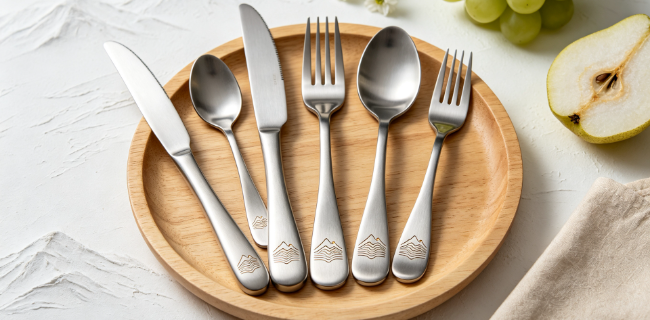
Homefelt can discuss these specifications with buyers during product development. Final values should be documented in the approved product specification rather than assumed from a reference photograph.
Balancing Product Dimensions, Weight, and Meal Presentation
Cutlery for onboard catering must work with the entire meal-service format. A spoon that is too large may be inconvenient for a compact meal container, while a fork with unsuitable proportions may not perform well with the intended menu. A knife also needs a profile appropriate to the foods being served.
For example, a rail catering supplier preparing meals for different service classes may need a compact cutlery set for standard meal boxes and a larger set for premium meal presentation. The two versions can share a coordinated design language while using different dimensions or piece combinations.
A useful development process includes three steps.
First, identify the actual use conditions. Buyers should provide tray dimensions, meal container measurements, menus, service class requirements, and any storage limitations.
Second, compare suitable product samples. Evaluate handling, proportions, surface quality, and compatibility with the serving format. Measurements should be recorded so the purchasing team can compare alternatives objectively.
Third, approve the final specification before volume production. Confirm the selected design, material, dimensions, weight targets, finish, packaging, and acceptable quality criteria in one documented reference.
This approach reduces ambiguity between product selection and manufacturing and gives both parties a clearer basis for evaluating production consistency.
Quality Inspection for Large Catering Orders
Large transportation catering programs may distribute cutlery through multiple kitchens, catering facilities, or service locations. Consistent quality is therefore important not only for the first shipment but also for subsequent replenishment orders.
A cutlery inspection plan can include:
Visual checks for scratches, dents, stains, polishing marks, and other agreed appearance defects.
Dimensional measurement against the approved product drawing or specification.
Weight checks where the project includes defined weight tolerances.
Edge and tip checks to identify unacceptable burrs or irregularities.
Quantity verification to confirm that each carton contains the correct products.
Packaging checks to confirm that items remain protected during handling and transportation.
Inspection frequency, sampling quantity, and acceptance criteria should be agreed upon according to the purchase contract and the buyer's quality requirements. Material certificates, relevant test reports, and applicable factory audit documents can also be discussed as part of supplier qualification. Availability and applicability should be verified for the specific product and destination market.
Project Example: Coordinating Two Catering Formats
Consider a catering distributor supplying both short-distance rail services and longer journeys. The distributor needs cutlery that fits two meal formats while maintaining a recognizable appearance across both programs.
The purchasing team can begin with a shared design direction and then define separate specifications for each service. One version may prioritize compact dimensions and simplified packing, while the other may require a different spoon size or a more formal presentation. Both versions should have their own approved drawings, material details, packaging requirements, and inspection criteria.
During project review, the distributor can compare samples against the actual meal trays, assess the proposed cost structure, and confirm production quantities. After approval, the manufacturer can use the agreed specifications to guide production and quality checks.
This example illustrates a practical project-planning method rather than a claim about a specific completed customer order. The same process can help procurement teams organize product requirements before requesting quotations.
OEM and ODM Manufacturing Support from Homefelt Factory
Homefelt factory supports B2B buyers looking for stainless steel cutlery customization, wholesale supply, and large-volume manufacturing. OEM projects can follow the buyer's established drawings, branding requirements, and packaging specifications. ODM projects can begin with a product concept and develop through design discussion, sample evaluation, and specification confirmation.
Support can include:
Knife, fork, and spoon selection for different meal-service formats.
Product dimensions, material options, and finish discussions.
Customized cutlery combinations and set configurations.
Private-label packaging and branding coordination.
Production planning for agreed order quantities.
Packaging and transportation coordination for export orders.
Homefelt also works with buyers to identify the product documentation and quality records relevant to their purchasing requirements. Certifications and audit documents should be reviewed for their actual scope and validity rather than treated as automatic proof that every product meets every market requirement.
For a quotation, buyers can share estimated quantities, target dimensions, material preferences, packaging details, delivery destination, and any required testing or documentation. Providing these details helps the factory evaluate the project more accurately.
Build a Reliable Cutlery Supply Program
For airline and rail catering buyers, a successful cutlery project starts with clearly defined service requirements and measurable product specifications. Material selection, dimensions, weight, finish, inspection standards, and packaging all contribute to a more predictable purchasing process.
Homefelt factory can discuss customized stainless steel cutlery, OEM/ODM development, private-label programs, and wholesale orders for buyers seeking a coordinated manufacturing partner. With product design, packaging, and transportation planning considered together, procurement teams can establish a clearer path from initial requirements to bulk production.
Contact Homefelt through the company website to discuss your project, request a quotation, or confirm the specifications for your next stainless steel cutlery order.
You May Be Interested In
Stainless Steel Cutlery Manufacturing for OEM Projects
Custom Knife, Fork, and Spoon Specifications
Wholesale Stainless Steel Flatware Supply
Private Label Cutlery Sets and Packaging Options
Bulk Cutlery Production and Export Services
Visit Homefelt factory online: https://www.huabao-homecollection.com/