

04 May
PVD Coated Stainless Steel Cutlery: Color Durability and Quality
PVD Coated Stainless Steel Cutlery: Colo...
PVD Coated Stainless Steel Cutlery: Color Durability and Quality
Colored stainless steel cutlery gives brands and distributors more options when developing distinctive tableware collections. Gold, black, and other decorative finishes can help a spoon, fork, or knife match a retail brand identity, hospitality concept, or coordinated cutlery set. For B2B buyers, however, choosing a color is only the first step. The coating process, base material, product design, and inspection criteria all influence the finished result.
Physical vapor deposition, commonly known as PVD, is one technology used to create decorative coatings on metal products. When evaluating PVD coated stainless steel cutlery, buyers should consider appearance, consistency, intended use, maintenance expectations, and the evidence available to support product claims.
Homefelt factory supports stainless steel cutlery customization, OEM/ODM cooperation, private-label development, and wholesale production. Discussing coating requirements early helps buyers establish a clear specification before approving samples and placing bulk orders.
What Is PVD Coating on Stainless Steel Cutlery?
PVD is a group of coating processes in which material is vaporized and deposited onto a surface under controlled conditions. The resulting coating can provide a decorative appearance and, depending on the coating system and application, contribute to surface performance.
For cutlery, PVD may be used to create finishes such as gold-colored or black decorative surfaces. The actual color, shade, and surface appearance depend on the coating material, process settings, base surface, and product geometry.
PVD should not be treated as a single universal finish with identical properties across every product. Different coating systems and production conditions can produce different results. Buyers should therefore review the actual sample and technical information for the specific product they intend to purchase.
It is also important to distinguish coating performance from the underlying stainless steel grade. The base material and the coating serve different purposes, and a decorative coating does not automatically establish the material composition or suitability of the complete product for every application.
Choosing the Right Color for a Cutlery Collection
Color selection should consider the target market, product positioning, surrounding design elements, and the visual effect buyers want to achieve.
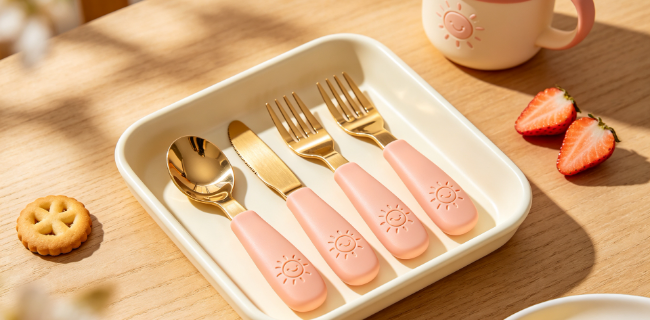
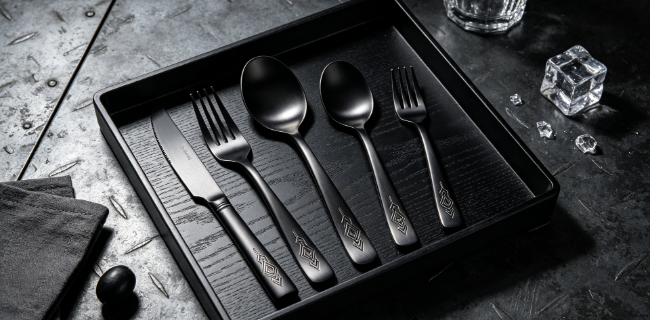
Gold-colored cutlery may suit premium retail collections, gift sets, or coordinated table settings. Black cutlery can provide a contemporary appearance, while other available colors may support a specific brand concept. The precise options depend on the manufacturer's capabilities and the product design.
Before confirming a color, buyers should evaluate several characteristics:
Shade consistency across spoons, forks, and knives.
Surface reflectivity and the difference between polished and brushed appearances.
Color uniformity across the handle and working end.
Compatibility with decorative patterns and logo marking.
Visual consistency under normal retail or dining-room lighting.
The appearance of the coating on curved edges and detailed surfaces.
A digital image can help communicate the intended look, but it may not accurately represent the final color on metal. Screen settings, lighting, photography, and image editing can all affect the appearance of a reference image. For important projects, a physical sample is a more reliable basis for approval.
Why Base Material and Surface Preparation Matter
The quality of a coated cutlery product depends partly on the condition of the underlying surface. Scratches, polishing marks, uneven preparation, or surface contamination may affect the appearance of the final coating.
For this reason, buyers should evaluate the complete product rather than focusing only on the color. A well-defined specification can include the stainless steel grade, dimensions, thickness, weight, base surface finish, coating color, and agreed appearance criteria.
The geometry of each piece also matters. A spoon bowl, fork tine, and knife handle have different shapes, edges, and surface areas. These differences can influence how the coating appears across a matching set.
When developing a custom design, it is useful to confirm whether the same coating specification can be applied consistently to all items. If different product shapes or manufacturing processes are involved, the supplier should clarify any limitations before the buyer approves the final sample.
How to Evaluate PVD Coating Durability
A decorative finish should be evaluated according to the product's intended use and the buyer's performance expectations. A product designed for occasional household use may face different conditions from cutlery used frequently in commercial settings.
Potential evaluation methods may include adhesion assessment, abrasion resistance testing, corrosion-related testing, or other checks appropriate to the selected coating system. The exact test method and acceptance criteria should be established with the supplier or a qualified testing laboratory.
Buyers should avoid assuming that a coating is durable simply because it looks uniform on a new sample. Appearance alone does not establish long-term performance.
Useful questions for a supplier include:
What coating system is proposed for the selected product?
Which durability tests are available for this coating and substrate?
What test method and conditions were used?
Does the report identify the tested product or representative sample?
What appearance changes or damage are considered unacceptable?
Are care instructions available for the finished cutlery?
A test report should be reviewed within its stated scope. Results obtained using one coating system, base material, or test condition should not automatically be applied to a different product.
Creating Clear Quality Criteria for Bulk Orders
For wholesale and private-label projects, buyers should convert color and durability expectations into documented acceptance criteria.
A practical inspection plan may address color uniformity, visible coating defects, scratches, incomplete coverage, and differences between matching pieces. It can also define how the products should be examined, which reference sample will be used, and how deviations will be handled.
For example, a distributor ordering a gold-colored stainless steel cutlery set may require a consistent appearance across dinner spoons, forks, teaspoons, and table knives. The approved sample can serve as the visual reference, while the specification records the required base material, dimensions, coating finish, and product identification.
If a production batch differs visibly from the approved reference, the buyer and supplier should review the actual products and inspection evidence before deciding on corrective action. Clear criteria make this discussion more objective and reduce disagreements caused by subjective descriptions such as “too dark” or “not shiny enough.”
Buyers should also confirm whether logo marking, decorative patterns, or packaging requirements could affect the appearance or handling of the coated items. These details are best reviewed before bulk production begins.
Supporting OEM and Private-Label Cutlery Development
PVD finishes can be part of a wider custom cutlery project involving product shape, handle design, logo placement, set configuration, and retail packaging. Coordinating these details helps create a more consistent product concept.
Homefelt factory works with B2B customers on stainless steel knife, fork, and spoon customization, OEM/ODM projects, private-label orders, wholesale supply, and large-volume production. Buyers can discuss available colors, product specifications, sample approval, inspection requirements, packaging design, and transportation arrangements.
For an initial inquiry, provide the intended product types, reference images or samples, preferred color, estimated order quantity, target market, and any specific performance or documentation requirements. If a durability report is required, confirm its availability and scope before finalizing the purchase specification.
Factory certifications and product test reports serve different purposes. Buyers should review each document according to the claims it supports and confirm that it is relevant to the proposed product and destination market.
Making an Informed Coated Cutlery Purchase
PVD coated stainless steel cutlery can help brands develop distinctive product ranges, but the final result depends on more than color selection. Base material, surface preparation, coating specifications, sample approval, and appropriate quality checks all contribute to a well-defined purchasing decision.
For B2B buyers, the practical approach is to confirm the desired appearance, establish measurable acceptance criteria, and review available performance evidence before placing a large order. This creates a clearer foundation for production and helps manage expectations across future orders.
You May Be Interested In
Custom Gold Stainless Steel Cutlery for Private-Label Brands
OEM/ODM Stainless Steel Spoon, Fork, and Knife Manufacturing
Wholesale Colored Flatware for Retail Collections
Stainless Steel Cutlery Specifications and Quality Inspection
Request a Custom PVD Cutlery Quotation from Homefelt Factory
Visit https://www.huabao-homecollection.com/ to explore stainless steel cutlery products and discuss colored finishes, OEM/ODM customization, and wholesale requirements with Homefelt factory.