

30 May
How to Select Commercial Stainless Steel Cutlery for Hospitality Projects
How to Select Commercial Stainless Steel...
How to Select Commercial Stainless Steel Cutlery for Hospitality Projects
Hotels, restaurants, catering companies, and hospitality distributors need stainless steel cutlery that combines practical functionality, consistent appearance, and reliable supply. Unlike products purchased for occasional household use, commercial cutlery may be handled repeatedly, washed frequently, and reordered as dining operations expand.
For purchasing teams, choosing the right knives, forks, and spoons requires a clear understanding of material specifications, product dimensions, surface finishes, packaging, and quality control. Homefelt factory supports commercial buyers with stainless steel cutlery customization, OEM/ODM manufacturing, wholesale supply, and large-volume production.
Define the Requirements of the Hospitality Project
Before comparing suppliers, buyers should identify the intended application and expected purchasing volume. A hotel restaurant, casual dining chain, catering company, and hospitality wholesaler may have different priorities.
A premium dining venue may prefer a refined appearance and coordinated handle design. A high-volume restaurant may prioritize practical handling, easy replacement, and consistent specifications across multiple locations.
Start by confirming:
Type of establishment and dining environment
Required knife, fork, and spoon styles
Expected number of place settings
Preferred product weight and dimensions
Cleaning and maintenance conditions
Target budget and replenishment requirements
Packaging, labeling, and delivery arrangements
A written purchasing brief helps manufacturers recommend suitable products and prepare quotations based on the actual project rather than a general product description.
Choose Appropriate Stainless Steel Materials
Material selection influences corrosion resistance, appearance, and other product properties. Common flatware grades include 18/10, 18/8, and 18/0 stainless steel, but buyers should verify the actual material composition and suitability for their intended application.
The material should be selected according to product requirements, budget, expected use, and applicable market standards. A higher nickel content does not automatically guarantee better performance in every situation, because product construction, finishing, cleaning practices, and manufacturing quality also matter.
For commercial purchasing, request a material specification that identifies the grade and any relevant supporting documentation. If a project requires particular food-contact compliance or testing, clarify those requirements before production.
The chosen specification should apply to the relevant product components. Buyers should not assume that the knife, fork, and spoon necessarily use identical construction simply because they are sold as one set.
Evaluate Product Dimensions and Handling Comfort
Commercial cutlery should be comfortable for its intended users while maintaining consistent proportions across the collection.
Product dimensions affect the overall appearance and handling experience. Important parameters include the overall length, handle width, thickness, utensil-head dimensions, and product weight.
For hospitality projects, buyers should evaluate physical samples rather than relying entirely on product photographs. A fork may look suitable online but feel too light in the hand, while a spoon with an oversized bowl may not fit the dining style of the intended venue.
A technical specification sheet should record the agreed dimensions and tolerances for each utensil. Separate specifications may be necessary for dinner knives, table forks, tablespoons, teaspoons, and serving pieces.
This documentation makes it easier to compare samples, communicate adjustments, and maintain consistency during repeat orders.
Select Surface Finishes for Daily Operations
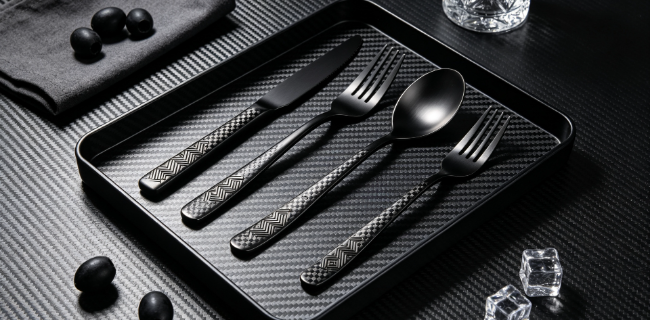
Surface finish contributes to the visual identity of a hospitality cutlery collection. Mirror-polished products offer a bright, reflective appearance, while satin and brushed finishes provide a more subdued look.
The appropriate finish depends on the restaurant concept, tableware coordination, and buyer preferences. The finish should also be evaluated under realistic lighting conditions because reflections and visible marks may appear differently in photographs.
When reviewing samples, inspect the handles, utensil heads, edges, and transitions for uneven polishing, scratches, and unwanted surface defects. For coordinated sets, compare the knife, fork, and spoon together to confirm that their finishes are visually consistent.
Cleaning procedures should also be considered. Buyers should follow the care instructions appropriate to the selected material and finish rather than assuming every product will perform identically under every commercial washing process.
Plan Replenishment and Replacement Supply
Cutlery loss, damage, and expansion can create ongoing replacement requirements for hospitality businesses. Purchasing teams should therefore consider future availability when selecting a product.
For multi-location restaurant groups, standardized specifications can simplify purchasing across branches. Consistent product codes, approved reference samples, and documented material requirements help ensure that replacement items match the original collection.
Before placing a large order, confirm whether the supplier can support the expected purchasing schedule and what information will be retained for repeat production.
Useful records include product drawings, material grades, dimensions, finishes, logo specifications, and packaging details. Actual availability and lead times should be confirmed for each order, especially when customized designs or special finishes are involved.
OEM and ODM Cutlery for Hospitality Brands
Some hospitality buyers select standard products, while others need cutlery designed to match a specific brand identity or dining concept.
OEM manufacturing is suitable when the buyer already has drawings, specifications, or reference samples. ODM services can support the development of a new product design based on the buyer's requirements.
Homefelt factory can work with commercial customers on handle styling, product dimensions, coordinated knife-fork-spoon sets, logo applications, and packaging customization.
For an efficient development process, buyers should provide the intended application, target quantity, preferred materials, design references, branding requirements, and delivery destination. The manufacturer can review feasibility and prepare a project-specific quotation.
Customized products should be sampled and approved before mass production. Any changes to the material, finish, or dimensions should be documented so that the final order matches the agreed requirements.
Quality Inspection for Commercial Cutlery Orders
A commercial cutlery order should be evaluated against measurable criteria rather than appearance alone.
Depending on the product and purchasing requirements, inspections may cover:
Material documentation and product identification
Overall dimensions and thickness
Weight consistency within agreed limits
Surface finish and visible defects
Edge quality and construction
Quantity and configuration of packed sets
Packaging condition and carton markings
Where relevant, additional testing may be required for corrosion resistance or other specified performance characteristics. The testing method and acceptance criteria should be agreed upon in advance.
For large-volume orders, buyers should establish sampling procedures, inspection stages, and a process for handling nonconforming products. These arrangements help both parties understand how quality will be evaluated before shipment.
Factory Credentials and Supporting Documentation
Hospitality procurement teams may require evidence of supplier qualifications, operational standards, and product compliance.
Factory audit records, quality management certificates, material specifications, and product test reports serve different purposes. Their relevance depends on the buyer's sourcing policy and the requirements of the destination market.
Homefelt has experience working with customers who require structured supplier evaluation. Buyers can request details about applicable factory credentials and available product documentation when discussing a project.
Any certificates or reports should be checked for validity, scope, issuing organization, and relevance to the actual products being purchased. Clear documentation supports supplier evaluation but does not replace product-specific inspection or required testing.
A Practical Example: Standardizing Cutlery Across Restaurant Locations
Consider a restaurant group preparing to open several new locations. The purchasing team needs a coordinated cutlery collection that looks consistent across all dining rooms and can be reordered as business grows.
The team defines the required knife, fork, and spoon configurations, confirms material and finish preferences, and evaluates samples against a written specification. It then approves the final design and establishes inspection requirements for the bulk order.
By retaining the approved drawings and product references, the restaurant group creates a practical basis for future replenishment and new-location purchasing.
This approach can reduce specification misunderstandings and help maintain a consistent dining presentation across the business.
Work with Homefelt on Your Commercial Cutlery Requirements
Selecting commercial stainless steel cutlery involves balancing material, dimensions, surface finish, handling comfort, purchasing cost, and long-term supply requirements.
Homefelt factory provides stainless steel knife, fork, and spoon customization, OEM/ODM manufacturing, private label services, wholesale supply, and large-volume production. Customers can discuss product design, packaging, and transportation as part of a one-stop service tailored to their projects.
To request a quotation, prepare your preferred cutlery style, material specifications, estimated number of place settings, target quantity, packaging requirements, and delivery destination. Contact Homefelt to discuss suitable products and confirm the specifications for sampling and production.
You May Be Interested In
Wholesale Stainless Steel Cutlery for Hospitality Buyers
Custom Knife, Fork, and Spoon Manufacturing
OEM/ODM Flatware for Restaurant and Hotel Brands
Private Label Cutlery Design and Packaging
Bulk Stainless Steel Cutlery Quality Control
Visit https://www.huabao-homecollection.com/ to explore Homefelt's stainless steel cutlery products and discuss your next hospitality, wholesale, or customization project.