

17 May
Stainless Steel Cutlery Pairing Control for OEM and Private Label Orders
Stainless Steel Cutlery Pairing Control ...
Stainless Steel Cutlery Pairing Control for OEM and Private Label Orders
For buyers developing a stainless steel cutlery collection, individual knife, fork and spoon quality is only part of the purchasing decision. The three pieces also need to work as a coordinated group. When products are sourced for retail collections, hospitality projects, foodservice distribution or private label programs, differences between individual pieces can affect the appearance and usability of the complete set.
This is why cutlery pairing deserves attention during OEM and bulk production. Homefelt factory works with stainless steel knives, forks, spoons and complete flatware collections, helping customers coordinate specifications across individual products while maintaining practical production requirements.
What Does Cutlery Pairing Mean in Manufacturing?
Cutlery pairing refers to how different pieces within one collection are coordinated in terms of visual characteristics, functional details and production specifications.
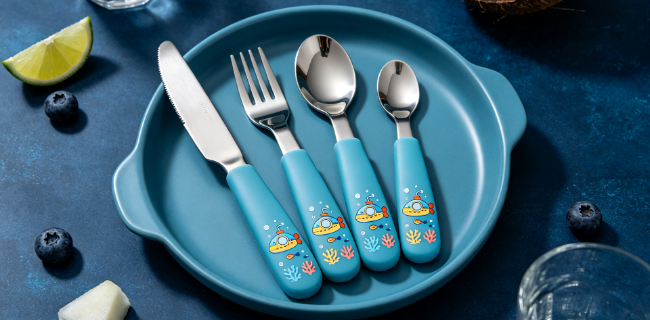
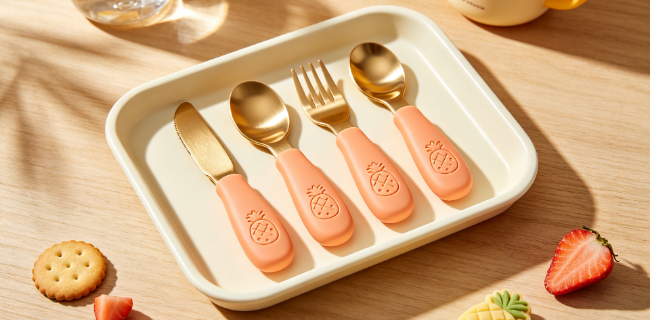
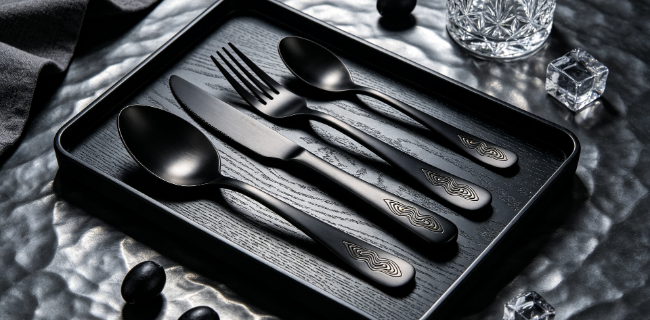
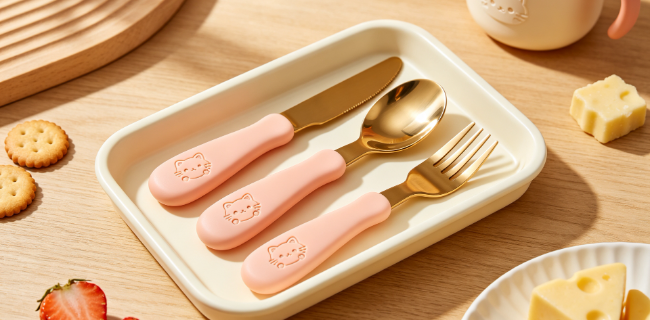
A knife, fork and spoon do not need to be identical in shape. Each piece has a different function and manufacturing structure. However, they should clearly belong to the same collection.
Important points can include:
Overall visual language
Handle treatment
Surface finish
Material specification
Thickness range
Functional proportions
Edge and transition details
Product length
Weight relationship
Logo or branding position
For an OEM customer, these details are normally confirmed during product development rather than left to the final packing stage.
Why Pairing Matters for B2B Flatware Orders
A buyer may order several individual SKUs that will eventually be displayed or used together. If the handle finish is slightly different between the spoon and fork, or if the knife has a noticeably different visual weight, the complete collection may look inconsistent even when every individual product passes its own inspection.
This is particularly important for private label collections.
Retail buyers often evaluate a collection as one visual family. Distributors also need products that can be combined into practical sets. Hospitality customers may require several pieces to create a unified table setting.
For this reason, pairing should be considered at the collection level.
Key Parameters to Review
Homefelt approaches pairing through measurable product information rather than visual judgment alone.
Material
The stainless steel specification should be defined according to the intended product positioning and customer requirements. Material information can be documented in product specifications and supporting quality records.
Thickness
Thickness affects product feel, rigidity and manufacturing characteristics. The target should be established separately for knives, forks and spoons where necessary instead of assuming that every piece must use the same thickness.
Length
The overall length of each piece should create a practical relationship within the collection. A dinner spoon, table fork and table knife can have different dimensions while still presenting a coordinated appearance.
Handle Details
Handle shape, width, taper and finishing treatment have a strong influence on whether different pieces look like members of the same collection.
Surface Finish
Mirror polishing, satin treatment or other specified finishes should be coordinated across the collection. The objective is not simply to produce a similar shine but to maintain the customer's approved appearance.
Branding Position
For private label projects, logos, marks or decorative elements should be positioned consistently according to the approved specifications. Different product shapes may require different technical positioning, but the visual relationship should remain intentional.
How Homefelt Coordinates Different Cutlery Pieces
A practical OEM project normally begins with a clear product brief. Instead of developing each SKU independently, the factory can review the complete collection and identify relationships between the pieces.
For example, a customer may request:
One table knife
One table fork
One table spoon
One dessert spoon
One additional serving piece
The factory can review the collection as a group and compare the handle language, finish, dimensions, thickness requirements and production method.
This helps prevent a common problem: individual products that look acceptable separately but do not create a convincing collection when placed together.
Sample Review Before Bulk Production
For new OEM or ODM projects, samples provide an important opportunity to check pairing.
Customers can evaluate the actual knife, fork and spoon together instead of reviewing photographs of individual pieces only.
During sample review, buyers can check:
Whether the pieces look visually related
Whether the handle treatment is consistent
Whether the surface finish matches
Whether the weight relationship feels appropriate
Whether the products work together in a table setting
Whether branding details meet the approved design
If adjustments are required, the factory can incorporate the confirmed changes into the production specification before moving to larger quantities.
Project Experience and Manufacturing Coordination
Homefelt has decades of experience in stainless steel cutlery manufacturing and supports customers with different product combinations and market requirements.
For a private label customer developing a new collection, the project may include several knife, fork and spoon variations. Instead of treating each SKU as an isolated order, the factory can coordinate the specifications across the collection.
This is particularly useful when the customer needs OEM manufacturing, ODM development or large-volume wholesale supply.
The goal is straightforward: each individual piece should meet its own requirements while the complete collection maintains a consistent identity.
Inspection and Supporting Documentation
Cutlery pairing does not replace normal quality inspection. It works together with product-specific inspection procedures.
Depending on the project, relevant information can include material specifications, dimensional records, product inspection results and applicable testing documentation.
Homefelt also maintains experience with international customer requirements and factory assessment systems. The company has passed BSCI, SEDEX 4P, BRC, ISO9001 and Disney audits and has FAMA and FSC certificates.
For customers requiring additional documentation, the applicable materials can be discussed according to the project and destination market.
OEM, ODM and Private Label Production
Different customers have different levels of involvement in product development.
Some buyers provide finished drawings and require manufacturing according to specification. Others provide reference samples and expect the factory to develop the production version. Private label brands may also need support with product design, packaging and delivery coordination.
Homefelt can support these requirements as an integrated service.
A project may include:
Product concept and specification review
Knife, fork and spoon development
Sample coordination
Production confirmation
Packaging arrangement
Bulk manufacturing
Transportation coordination
This one-stop approach can simplify communication for buyers who need one supplier to manage several connected stages.
Choosing a Cutlery Factory for Collection Projects
When comparing stainless steel cutlery suppliers, buyers should look beyond individual product photographs.
Useful questions include:
Can the factory manufacture knives, forks and spoons under one collection?
Can specifications be coordinated across multiple SKUs?
Can the supplier support OEM and ODM development?
Can the factory provide product specifications and inspection information?
Can packaging be customized?
Can the supplier handle wholesale and large-volume production?
Can the same product requirements be maintained for repeat orders?
These questions help buyers evaluate whether a supplier can support a complete collection rather than only manufacture individual pieces.
Homefelt Factory for Long-Term Cutlery Supply
Homefelt focuses on stainless steel cutlery manufacturing for international B2B customers. With 40 years of experience in the stainless steel cutlery business, the factory supports OEM, ODM, private label, wholesale and bulk production requirements.
For customers developing a new flatware collection, the service can extend from product design and specification coordination to packaging and transportation.
The purpose is not simply to produce one shipment. A reliable cutlery manufacturing partner should be able to understand the customer's collection, maintain agreed specifications and support future production as the business develops.
If you are sourcing stainless steel knife, fork and spoon sets for a retail brand, distributor, restaurant group, hospitality project or other commercial application, Homefelt can review your requirements and recommend a suitable manufacturing approach.
You May Be Interested In
If you are planning an OEM or private label stainless steel cutlery project, you can send your product drawings, reference photos, target specifications, required quantities or packaging ideas to Homefelt.
For customized knife, fork and spoon collections, wholesale flatware production or large-volume orders, contact Homefelt at ingrid@homefelt.net to discuss your project, specifications and quotation requirements.